I was just thinking how easy it is to take our habitual ideas for granted, especially when every one else takes the same view.
Here are some to get started.
1) How do I know what I want, when I haven’t yet got it? Not having it, I cannot have an accurate idea about it. How much of life is spent (wasted?) in this uncertainty?
2) How do I know when something is doing me good, if the benefit does not occur immediately? For example, I go to a doctor or other kind of healer, who prescribes a course of treatment, and warns me it may be weeks or months before I get better. So I do get better. But how do I know I would not have got better without the treatment? (I accept that in some cases I would probably know.)
In the same way, how can I know that my prayer works, or what God thinks, etc etc?
Wednesday, 14 September 2011

Monday, 12 September 2011
V: What's wrong with religion?

But in my post “Mission Report”, elsewhere, I attempted to establish an important thing that is not wrong with it.
A common attack on Christianity (to name the religion we know best) is that its beliefs are false. But this is not what is wrong with it, even if Christians insist that their beliefs are true and we know they are not. In “Mission Report”, I claimed that “all religion is magic”, and so by definition beyond reason and the laws of nature. For magic to work, it must be believed, and so it is not surprising that in a modern world which is well-educated in reason and the laws of nature, Christians want to claim that reason and nature are on their side: even if, for some, it means denying Evolution. If you want to stop a limpet clinging to a rock, you will not persuade it to let go by argument. If you use a hammer and chisel to get it off, you can do it, but it will claim martyrdom and the moral victory, so no point trying. A limpet is a limpet and will relax its grip only when it wants to.
OK, so what then is wrong with religion? I’ll confess that I have not drawn up a list of topics under this heading. There is just one I have in mind, which inspired me to write the article. Let me be leisurely (let us be leisurely, dear reader!) so that I can start with the background to asking the question “What’s wrong with religion?” It started from a Sunday morning conversation, in bed. It’s that time when the BBC gives a nod towards Christianity, and sometimes it plays hymns that we both remember from childhood. In Jamaica where she grew up religion is taken very seriously indeed. For me, the boarding school system was based on full-blown lip-service, hypocritical where necessary, to the Church of England. It was part of the landscape, one of the great shrines to worship at, along with cricket, the responsibilities of Empire and the Queen. Together they were a kind of unified package. Alfred Lord Tennyson in his poem The Charge of the Light Brigade got the spirit precisely:
Theirs not to reason why;
Theirs but to do or die.
There was an element of military discipline about it. We were being trained for adult life, wherein the rules might seem arbitrary and cruel. To us, kept in order by fear of the cane, they sometimes seemed that way already. Knowing the Old Testament was a good way to get into that spirit, for the Lord God of the Children of Israel set a more violent example than anything we’d ever be asked to do. I mentioned this topic in a Bible-reading post, “The anointing of Saul”.
For K, brought up in an ex-colony, favourite destination of missionaries,the emphasis was somewhat different. If you were a church member, much would be demanded from you. That was part of the price to be paid for salvation, I guess. The Pentecostal Church was one of the most demanding. You’d be in trouble if the hem of your dress was an inch higher than approved, and so on.
But then I reflected that every religion shares this characteristic of a price to pay. It would be false to say that it’s imposed from a higher authority and forced upon the worshipper, just as false as saying that in capitalism, you are forced to buy the products you see advertised on television. You are attracted to them, and part with your dollars voluntarily. The more you have paid, the less you are willing to ask yourself whether the benefit you have received was worth the cost or matched up to the expectation. But if you do so ask yourself, you may well come to the conclusion that you did not invest enough: you shouldn’t have gone for the cheapest option. Translating this back into the price you might have to pay (I mean in commitment) to be one of the faithful in church, you can understand the pressure (from within your own self) to do penance, to repent your sins, to attend revivalist meetings and all the rest. It is human nature “to throw good money after bad”. If you will forgive the change of metaphor, no one is going to choose a moment when you are on the deepest ocean and furthest from shore, as a good time time to jump ship. Or to put it even more simply, the true believer is in it up to his or her neck. Treat such a person like a poor animal stuck in a trap: with compassion.
The half-mad street-preacher, who rants about damnation in the marketplace to heedless passers-by, is desperate to recapture that feeling of being saved. He’s willing to be mocked and ignored for it. In this act, he is taking up his cross and following his Lord, the better to knock on Heaven’s door.
This, then, is wrong with religion. It is very bad indeed for those who take it too seriously, the screws in whose heads might loosen during life’s bumpy ride. What makes it worse is the pastors whose income comes from their flock. The shepherd metaphor has its sinister side, for in real life, metaphors apart, every lamb is being nurtured for ultimate slaughter. Real-life shepherds don’t just love the pretty lambs who gambol in Spring. It’s a business which works best when your flock is sheepish.
I’d better stop. Metaphors have a life of their own. They can run out of control, like wolves in sheeps’ clothing!
Wednesday, 31 August 2011
B: The Stars of Minerva
(Hey, figured I'd throw this in here. It's an old story of mine that I never got around to posting on my Sheep Blog. Maybe it's relevant. Maybe it isn't. But you seem to get a kick out of these stories anyway, so I don't suppose it could hurt to post it.)
Nestled among the hills and valleys, hidden under the trees and the mist, lay the little town of Minerva. John dreamed of his childhood there as the boxcar rocked quietly though-out the night. He dreamed of running across the hillsides with a little girl in a blue dress. White, fluffy, pieces of dandelions blew through the air. He couldn’t remember the girl’s name, but he went on dreaming anyway. He saw the stars reflected on the surface of Crystal Creek as it wound through a field with a row of trees lining each bank. The starlight flickered in the ripples of the shallow water as it broke against the rocks. He sat up in one of the trees with the little girl. She leaned over and kissed his cheek. He turned red and they dropped down out of the tree and chased each other across the field. He smiled in his sleep.
His sleep was suddenly broken by the harsh scraping of the boxcar’s door as it opened and the glaring light that burst through. He blinked and squinted and shaded his face which was smeared with soot and dirt. His denim clothes were faded and filthy in some spots and ripped in others. A group of angry silhouettes climbed into the car. “End of the line buddy. Get the hell off my train.”, one of them growled. The others kicked at John as he gathered up his things and rolled out the door. He lay on his back in the dust.
“Where am I?”, he asked. His voice cracked from thirst.
“Get out of here.”, was the only answer he received. He picked up his bag, shook the dust from it, and started off.
It was a bright grey morning and he found himself in the middle of a busy little town. Traffic zipped along the main street. The door of a corner drug store was propped open and a metal fan sat close by on the floor. The owner was out on the walk watching his new electric sign being put up as he wiped his hands on an old towel. The buzzing of the razor could be heard outside the barber shop. A man came out reading a newspaper. John approached him. “Good morning sir, do you mind telling me what town this is?”
“Marionette.”, the man replied without looking up. He kept on going. John stood watching him with joy slowly dawning on his face. He spun around, kicking up dust.
Marionette! That wasn’t far from Minerva. It was still quite a few miles away, but if he could catch a ride, he could be there by tomorrow morning. Back in Minerva! He recalled his dream. How could he have ever thought of leaving? He recalled his rude awakening. How could he have stayed away so long? He set off at once to find his ride. The train whistled as it pulled out of Marionette. John whistled back, “So long. Thanks for the ride.” The sun appeared from behind the clouds, and the shadows of the trees wound along the sidewalks and streets of Marionette.
It was late afternoon by the time John caught his ride. Two men were sitting high in the cab of an eighteen wheeler parked in the shade as he walked up. The driver looked down at him and sipped his coffee. “Hello.”, John smiled. The driver just stared with the same sour face. John squinted and stood with his hands in his pockets. “You guys wouldn’t be passing Minerva along the way would you?” The driver turned and looked back at his partner in the passenger’s seat.
“Five bucks.”, he said as he looked back.
“Fine. Fine.”, John pulled the money from his shirt pocket and handed it to the driver. The driver stretched the bill out in his hand and sat there looking at it as if verifying its authenticity. He crumpled it in his fist and then motioned John over.
“It’s going to take another hour or so to get loaded. Climb on up.” So John climbed in on the passenger side, and the other man crawled back into the sleeper compartment. John sat there in the passenger seat drifting off as mosquitoes flew around in the open window. He stared out at the picnic table that sat under a tree in front of the truck. A man in a greasy work shirt sat there holding a white sandwich in his dirty hands as he watched the cars pass by on the highway. Far off somewhere, someone was laughing at a joke.
Somewhere between waking and dreaming, John thought again of Minerva. But his thoughts were different than they had been earlier. His mind dwelt on a different time. He thought of the day he had left Minerva. He had taken the road out of town that led up along the hillside and just as he was about to top the crest of the hill, he turned back to look at the town laying in the valley below. His face twisted into an ugly shape and he let out an inarticulate cry of rage. He poured all the years of loneliness and alienation into that cry. He remembered the rainy days after school spent all alone in his room. He remembered the shoe box he’d kept under his bed, saving up money for his trip. He remembered all the years it took to fill it. But most of all he remembered the Book of Stars.
The book had been a present from his grandfather. On his eighth birthday his grandfather took him aside and showed it to him. It was an old book, bound in a leather cover. Book of Stars was inscribed in glittering gold across the cover. There was no author listed anywhere. Inside there were illustrations of constellations unlike any John had ever seen before. Below each illustration there was a brief story. John’s grandfather patted him on the shoulder and winked as he looked up. “Years and years ago, someone looked up into the night’s sky and imagined a whole new world of legends and found a new galaxy of constellations. He wrote them all in this book. When I was a boy, the book was given to me and I loved it. So now I give it to you. But you must be careful who you show it to.”
“But why?”
“They won’t see what you see. You won’t believe that it’s possible for them not to see. Nevertheless, they won’t. See, a person is only as deep as they let their gaze fall among the stars. They are only as wise as the mysteries they’ve peered into. But most people laugh at mysteries, and they think that looking at the sky is a waste of time.” The old man stopped to laugh with twinkling eyes. “As if life itself were a waste of time. But still”, he grew serious again, “a moment will come for each of them. It could be a moment of joy, or pain, even absolute horror. It doesn’t matter. The moment will come. Something will happen in their lives that will spark something deep inside them, and their eyes will just...open. They’ll look around them and everything will look so strange and wonderful. They’ll wonder who they are. They’ll wonder where they are. They’ll look into the eyes of people they’ve known all their lives and they’ll feel as though they’re complete strangers, as though they had never truly known them. It’s hard to explain, I suppose. But until a person reaches that moment, they’re not ready for things like this.” He tapped his fingers against the leather cover of the book. He patted the boy on the shoulder, and John went away with the book, his mind full of questions. His grandfather died the following spring. The funeral was held on a warm April day with a slight bit of rain; the kind of day his grandfather loved. There was a glow of light along the horizon, as if the rain clouds were a blanket that couldn’t quite be stretched across the sky. The procession of black umbrellas moved across the graveyard. John kept the Book of Stars hidden under his coat.
He fell in love with the book. He spent hours up in the attic with his head hanging out the window on clear nights, looking for constellations. Each one he found he made a little ink dot beside the corresponding illustration in the book. He sat at his desk in school and drew pictures of all the heroes in the book, and dreamed of all their adventures.
As his love for the book grew deeper, he often thought of his grandfather’s curious warning about showing the book to anyone. As time went on, he found himself less convinced by it. “How could they not love it? The book is incredible. It’s beautiful. There’s no way that they won’t be able to see that.” So he took the book to school, and he stood up to read passages of it during astronomy class. There were a few snickers and giggles from the back of the room, and finally the whole class erupted in out-right laughter. The teacher rapped her ruler and reprimanded John for making up such outrageous lies. “Those aren’t the constellations we learned about in class.”, she declared with indignant ignorance. John was crushed. He sat with his head down at his desk for the rest of the day. When the bell finally rang, he took off running for home.
There was a marsh he always passed on his way home. As he passed it that day, some boys from his class jumped out of hiding in front of him. They laughed as they tore the book out of John’s hands. They tore the pages out one by one and tossed them into the marsh. The pages drifted around the cat tails and out of sight. The boys left John crying on the bank of the marsh. So the day had come when he had turned his back on Minerva and topped the crest of the hill and went on out to the world.
The driver’s door popped open and woke John up. He blinked his eyes and looked out to see that they were still sitting under the shade of the tree and the man was still eating his sandwich at the picnic table. He felt as though he’d slept for years. The driver climbed up, started the rig, and pulled out onto the highway.
It was a clear night and John could see all the old stars in the sky as the truck neared Minerva. Near dawn he spotted a new constellation in the east. Six stars arranged in a simple circle. He made a note of the constellation and wondered why he’d never noticed it before. At 7am the truck driver let him off on the outskirts of Minerva at the crossroads of Hickory and Chestnut Rd. where the same spreading willow tree still presided over the corner. John picked up his bag and started down Chestnut towards home. Somewhere far off he could hear church bells ringing.
Everyone filed into the little country church house as the bells rang. A group of kids were playing in a mud puddle outside, but as the bells rang, they ran joyfully for the doors of the church. The entire town of Minerva was gathered together and all the rows were filled. They took up their song books and began to sing.
As John walked along the streets of Minerva in the dripping early morning mist, he found the whole town deserted. He looked everywhere for people, but he found no one. A faint sound pricked at his ear. He followed it slowly, cocking his head. The sound grew a little louder. It was beautiful. It was dozens of voices in perfect, majestic, harmony. The music lifted higher and higher and on to greater and greater joy. John spun around in the empty street. Everything looked strange and wonderful in the golden light. The sun began to rise over the rooftops as though the music were lifting it into the sky. Was this the moment his grandfather had spoken of? He listened carefully to the music. Eventually it led him to the church house.
As the song ended, the congregation settled quietly into their seats. John took a seat in the back of the room. Simon, the old book keeper, came forward to the pulpit. He opened a leather bound book and began to read. As Simon began the first sentence, John lifted his head. It was the Book of Stars. Simon had been walking along the marsh later in that same day that the boys had ripped up the book. He had found the loose pages drifting on the water, and he had taken them home, dried them out, and carefully bound them back together. Many of the pages had been lost, and many that had been found were damaged and ruined. But Simon managed to save a great deal of the book, and for years he kept it a secret. Then one year hard times fell on Minerva. Everyone struggled, but as they struggled each one felt something spark within them and one by one their eyes were opened. Simon saw this and he began to go about in the evenings, reading passages from the book. People found new hope in their lives because of it, and soon they all began to gather in the church house on Sunday mornings to hear Simon read from the book.
Tears welled in John’s eyes as he looked about the congregation. He saw some people he once knew, seriously listening to the stories, even the boys who had been there that day on the bank of the marsh. Their eyes were filled with wonder. John stood up and made his way to the head of the church. As he stood before the congregation some of them gasped in recognition. “I have something to say.”, he began. “This morning, on my way here, I noticed a constellation in the east that I had never seen before. There were six stars in the form of a circle. I propose that from this day on, these stars should be known as the Stars of Minerva. There is a long story of a long journey that goes with them, but I need to rest and gather my strength before I get into all that. Know only that this book once belonged to me. One day I lost it, and having lost it I went out into the world to find it again. I had to travel far out into the world and come all the way back around the circle before I finally found it.” The congregation cheered. They rushed forward and gathered around him. A girl pushed through the crowd and stood before him, smiling. She was grown now but John still recognized her. All these years he was convinced that she was just a creation of his dreams. He leaned over and kissed her cheek.
Nestled among the hills and valleys, hidden under the trees and the mist, lay the little town of Minerva. John dreamed of his childhood there as the boxcar rocked quietly though-out the night. He dreamed of running across the hillsides with a little girl in a blue dress. White, fluffy, pieces of dandelions blew through the air. He couldn’t remember the girl’s name, but he went on dreaming anyway. He saw the stars reflected on the surface of Crystal Creek as it wound through a field with a row of trees lining each bank. The starlight flickered in the ripples of the shallow water as it broke against the rocks. He sat up in one of the trees with the little girl. She leaned over and kissed his cheek. He turned red and they dropped down out of the tree and chased each other across the field. He smiled in his sleep.
His sleep was suddenly broken by the harsh scraping of the boxcar’s door as it opened and the glaring light that burst through. He blinked and squinted and shaded his face which was smeared with soot and dirt. His denim clothes were faded and filthy in some spots and ripped in others. A group of angry silhouettes climbed into the car. “End of the line buddy. Get the hell off my train.”, one of them growled. The others kicked at John as he gathered up his things and rolled out the door. He lay on his back in the dust.
“Where am I?”, he asked. His voice cracked from thirst.
“Get out of here.”, was the only answer he received. He picked up his bag, shook the dust from it, and started off.
It was a bright grey morning and he found himself in the middle of a busy little town. Traffic zipped along the main street. The door of a corner drug store was propped open and a metal fan sat close by on the floor. The owner was out on the walk watching his new electric sign being put up as he wiped his hands on an old towel. The buzzing of the razor could be heard outside the barber shop. A man came out reading a newspaper. John approached him. “Good morning sir, do you mind telling me what town this is?”
“Marionette.”, the man replied without looking up. He kept on going. John stood watching him with joy slowly dawning on his face. He spun around, kicking up dust.
Marionette! That wasn’t far from Minerva. It was still quite a few miles away, but if he could catch a ride, he could be there by tomorrow morning. Back in Minerva! He recalled his dream. How could he have ever thought of leaving? He recalled his rude awakening. How could he have stayed away so long? He set off at once to find his ride. The train whistled as it pulled out of Marionette. John whistled back, “So long. Thanks for the ride.” The sun appeared from behind the clouds, and the shadows of the trees wound along the sidewalks and streets of Marionette.
It was late afternoon by the time John caught his ride. Two men were sitting high in the cab of an eighteen wheeler parked in the shade as he walked up. The driver looked down at him and sipped his coffee. “Hello.”, John smiled. The driver just stared with the same sour face. John squinted and stood with his hands in his pockets. “You guys wouldn’t be passing Minerva along the way would you?” The driver turned and looked back at his partner in the passenger’s seat.
“Five bucks.”, he said as he looked back.
“Fine. Fine.”, John pulled the money from his shirt pocket and handed it to the driver. The driver stretched the bill out in his hand and sat there looking at it as if verifying its authenticity. He crumpled it in his fist and then motioned John over.
“It’s going to take another hour or so to get loaded. Climb on up.” So John climbed in on the passenger side, and the other man crawled back into the sleeper compartment. John sat there in the passenger seat drifting off as mosquitoes flew around in the open window. He stared out at the picnic table that sat under a tree in front of the truck. A man in a greasy work shirt sat there holding a white sandwich in his dirty hands as he watched the cars pass by on the highway. Far off somewhere, someone was laughing at a joke.
Somewhere between waking and dreaming, John thought again of Minerva. But his thoughts were different than they had been earlier. His mind dwelt on a different time. He thought of the day he had left Minerva. He had taken the road out of town that led up along the hillside and just as he was about to top the crest of the hill, he turned back to look at the town laying in the valley below. His face twisted into an ugly shape and he let out an inarticulate cry of rage. He poured all the years of loneliness and alienation into that cry. He remembered the rainy days after school spent all alone in his room. He remembered the shoe box he’d kept under his bed, saving up money for his trip. He remembered all the years it took to fill it. But most of all he remembered the Book of Stars.
The book had been a present from his grandfather. On his eighth birthday his grandfather took him aside and showed it to him. It was an old book, bound in a leather cover. Book of Stars was inscribed in glittering gold across the cover. There was no author listed anywhere. Inside there were illustrations of constellations unlike any John had ever seen before. Below each illustration there was a brief story. John’s grandfather patted him on the shoulder and winked as he looked up. “Years and years ago, someone looked up into the night’s sky and imagined a whole new world of legends and found a new galaxy of constellations. He wrote them all in this book. When I was a boy, the book was given to me and I loved it. So now I give it to you. But you must be careful who you show it to.”
“But why?”
“They won’t see what you see. You won’t believe that it’s possible for them not to see. Nevertheless, they won’t. See, a person is only as deep as they let their gaze fall among the stars. They are only as wise as the mysteries they’ve peered into. But most people laugh at mysteries, and they think that looking at the sky is a waste of time.” The old man stopped to laugh with twinkling eyes. “As if life itself were a waste of time. But still”, he grew serious again, “a moment will come for each of them. It could be a moment of joy, or pain, even absolute horror. It doesn’t matter. The moment will come. Something will happen in their lives that will spark something deep inside them, and their eyes will just...open. They’ll look around them and everything will look so strange and wonderful. They’ll wonder who they are. They’ll wonder where they are. They’ll look into the eyes of people they’ve known all their lives and they’ll feel as though they’re complete strangers, as though they had never truly known them. It’s hard to explain, I suppose. But until a person reaches that moment, they’re not ready for things like this.” He tapped his fingers against the leather cover of the book. He patted the boy on the shoulder, and John went away with the book, his mind full of questions. His grandfather died the following spring. The funeral was held on a warm April day with a slight bit of rain; the kind of day his grandfather loved. There was a glow of light along the horizon, as if the rain clouds were a blanket that couldn’t quite be stretched across the sky. The procession of black umbrellas moved across the graveyard. John kept the Book of Stars hidden under his coat.
He fell in love with the book. He spent hours up in the attic with his head hanging out the window on clear nights, looking for constellations. Each one he found he made a little ink dot beside the corresponding illustration in the book. He sat at his desk in school and drew pictures of all the heroes in the book, and dreamed of all their adventures.
As his love for the book grew deeper, he often thought of his grandfather’s curious warning about showing the book to anyone. As time went on, he found himself less convinced by it. “How could they not love it? The book is incredible. It’s beautiful. There’s no way that they won’t be able to see that.” So he took the book to school, and he stood up to read passages of it during astronomy class. There were a few snickers and giggles from the back of the room, and finally the whole class erupted in out-right laughter. The teacher rapped her ruler and reprimanded John for making up such outrageous lies. “Those aren’t the constellations we learned about in class.”, she declared with indignant ignorance. John was crushed. He sat with his head down at his desk for the rest of the day. When the bell finally rang, he took off running for home.
There was a marsh he always passed on his way home. As he passed it that day, some boys from his class jumped out of hiding in front of him. They laughed as they tore the book out of John’s hands. They tore the pages out one by one and tossed them into the marsh. The pages drifted around the cat tails and out of sight. The boys left John crying on the bank of the marsh. So the day had come when he had turned his back on Minerva and topped the crest of the hill and went on out to the world.
The driver’s door popped open and woke John up. He blinked his eyes and looked out to see that they were still sitting under the shade of the tree and the man was still eating his sandwich at the picnic table. He felt as though he’d slept for years. The driver climbed up, started the rig, and pulled out onto the highway.
It was a clear night and John could see all the old stars in the sky as the truck neared Minerva. Near dawn he spotted a new constellation in the east. Six stars arranged in a simple circle. He made a note of the constellation and wondered why he’d never noticed it before. At 7am the truck driver let him off on the outskirts of Minerva at the crossroads of Hickory and Chestnut Rd. where the same spreading willow tree still presided over the corner. John picked up his bag and started down Chestnut towards home. Somewhere far off he could hear church bells ringing.
---oOo---
Everyone filed into the little country church house as the bells rang. A group of kids were playing in a mud puddle outside, but as the bells rang, they ran joyfully for the doors of the church. The entire town of Minerva was gathered together and all the rows were filled. They took up their song books and began to sing.
As John walked along the streets of Minerva in the dripping early morning mist, he found the whole town deserted. He looked everywhere for people, but he found no one. A faint sound pricked at his ear. He followed it slowly, cocking his head. The sound grew a little louder. It was beautiful. It was dozens of voices in perfect, majestic, harmony. The music lifted higher and higher and on to greater and greater joy. John spun around in the empty street. Everything looked strange and wonderful in the golden light. The sun began to rise over the rooftops as though the music were lifting it into the sky. Was this the moment his grandfather had spoken of? He listened carefully to the music. Eventually it led him to the church house.
As the song ended, the congregation settled quietly into their seats. John took a seat in the back of the room. Simon, the old book keeper, came forward to the pulpit. He opened a leather bound book and began to read. As Simon began the first sentence, John lifted his head. It was the Book of Stars. Simon had been walking along the marsh later in that same day that the boys had ripped up the book. He had found the loose pages drifting on the water, and he had taken them home, dried them out, and carefully bound them back together. Many of the pages had been lost, and many that had been found were damaged and ruined. But Simon managed to save a great deal of the book, and for years he kept it a secret. Then one year hard times fell on Minerva. Everyone struggled, but as they struggled each one felt something spark within them and one by one their eyes were opened. Simon saw this and he began to go about in the evenings, reading passages from the book. People found new hope in their lives because of it, and soon they all began to gather in the church house on Sunday mornings to hear Simon read from the book.
Tears welled in John’s eyes as he looked about the congregation. He saw some people he once knew, seriously listening to the stories, even the boys who had been there that day on the bank of the marsh. Their eyes were filled with wonder. John stood up and made his way to the head of the church. As he stood before the congregation some of them gasped in recognition. “I have something to say.”, he began. “This morning, on my way here, I noticed a constellation in the east that I had never seen before. There were six stars in the form of a circle. I propose that from this day on, these stars should be known as the Stars of Minerva. There is a long story of a long journey that goes with them, but I need to rest and gather my strength before I get into all that. Know only that this book once belonged to me. One day I lost it, and having lost it I went out into the world to find it again. I had to travel far out into the world and come all the way back around the circle before I finally found it.” The congregation cheered. They rushed forward and gathered around him. A girl pushed through the crowd and stood before him, smiling. She was grown now but John still recognized her. All these years he was convinced that she was just a creation of his dreams. He leaned over and kissed her cheek.
V: Magical reality

But there has been inspiration. There have been things lurking in the depths of my psyche that seemed to need saying, but then one would have to find words. Finding words means more than just finding words. It means using words as a bridge to cross the g and perception, so that someone else might approximately see through my eyes.
Ok, here goes. When I wrote two posts on types of reality, I was planning to solve major unsolved questions which are bugging the world in this 21st century. Perhaps they are not recognized as unsolved questions. They are seen as incompatible disagreements, wherein my being right in my impeccable rightness necessarily means that someone else (millions of people) are wrong in their misguidedness—or at worst are evil to the bone for failing to recognize my rightness, so that they shall go to hell, whether or not I help send them there first.
These disagreements have a common form. “This is how it is.” “No, this is how it is.” I am proposing that the big issues of the world boil down to disagreements as to the content of reality. Many people say that these issues boil down to morality: that it is necessary to temper our selfishness and consider the welfare of others: other humans, other species, the whole finely balanced Earth (if not the Universe in which it hangs suspended). Morality is too big a challenge for me. There are millions who have answers to it but I don’t.
Where I wanted to go, in turning inspiration to words, I can now try to summarise as possible. (I couldn’t have done this before.)
1) There is an objective reality. This is fully established in our modern understanding, which is not distracted by Aboriginal Dreamtime, African pantheism, any pantheon of squabbling gods, or even one centralized Almighty Father who rules the whole lot in his highly mysterious way (with the right to lay miracles on us when he feels like it).
2) These distractions from objective reality we are fully justified in calling unreality, along with pulp fiction, dreams, frauds, lies, hallucinations and the like.
3) Nevertheless our perception of objective reality is subjective. When I first sat on a cushion and took LSD, I noticed things crawling on the carpet. They were actually bits of stationary fluff. My eyes were working properly and sent electrical messages to my brain as normal. But the chemicals in my brain must have inhibited the operation that steadies the picture I see when my eyeballs jump about, and created the illusion of crawling.
4) Human perception of reality is affected in so many millions of ways, apart from taking drugs, that it can never be possible to say “I am now seeing unaffected reality, reality as it is.” I am seeing what my humanness allows me to see.
5) People have experiences of Heaven and Hell on this earth. My friend Raymond Sigrist has published a book In Love with Everything subtitled apophatic mysticism, the benefits and dangers of love without reason.
6) I would like to call “being in love with everything” a form of magical reality. You might call it illusion, especially as someone who’s in love with everything is more likely to get hit by a truck crossing the road than someone who’s suspicious of everything.
7) I believe that having false beliefs, such as “Jesus died on the cross to wash away my sins”, doesn’t prevent the believer benefiting from a magical reality that may help his path through life.
8) I am not interested in any false beliefs, but I embrace the way people are and the way that they want to be.
9) I have a normal sense of self, aware of my limitations (geographical, psychological, mortal etc) but in magical moments I know that I am part of everything and that the separation is illusion. It’s not being in love with everything but it might be growing in that direction.
10) I want to occupy a conceptual framework, or dwell in a word-web, if that makes any sense, which acknowledges a wider reality than one rooted in the 21st century and watered by the ongoing zeitgeist.
11) Getting to that wider verbal space may or may not be possible via philosophy.
This, dear Bryan, is the nearest I can get in an impromptu hour or so to setting out my stall, my plan, if you will.
Monday, 29 August 2011
V: I may take a back seat for a while
Hi Bryan, my impulse is to pull out for a while. At present I’m feeling we are not getting anywhere. But I don’t want to just destroy the thing. How about I just lie low for a while and give you a chance to develop beyond the preliminary notes and move forward to go where you’re going? Your writing is always interesting and readable and I continue to admire your input but I don’t think our ideas have started to mesh in a fruitful way. This may contradict what I’ve said before, but it’s apparent that you have things to say and so do I but they don’t seem to interact too well.
I thought I better say this after having made a comment on A Wayfarer’s Notes about perhaps not continuing the collaboration. Not that we have any responsibility to report progress to anyone, but it just cropped up, and I don’t like it when expectations are raised which I may not be able to fulfil!
I thought I better say this after having made a comment on A Wayfarer’s Notes about perhaps not continuing the collaboration. Not that we have any responsibility to report progress to anyone, but it just cropped up, and I don’t like it when expectations are raised which I may not be able to fulfil!
B: Another Comment Too Long Too Be a Comment
I'll have to think about these "subjective visions of the world", which I admit exist and which I don't recall ever disparaging, although I'm not entirely sure exactly what you mean by that, and I won't presume to guess either.
You say that I'm disputing objections that you haven't raised. I think perhaps we're both doing a bit of that. For my part, I'm assuming that you dispute objective reality on the basis of statements like, "Reality is contingent on the observer.", which to my mind mind can only mean that the stove isn't real until I walk into the kitchen. To be precise, it would mean that there was no sense of even talking about the kitchen or anything else outside of my being there. Perhaps, the dispute here is a semantic one. You admit that a physical world exists beyond our perceptions, but you use the word "reality" to mean simply the sum of our knowledge and idea of the world. Well, you can call a duck a goose, and a goose a duck, but I'm not sure what's accomplished bickering over idiosyncratic word usages. Either the stove is real when I'm in the room or it isn't. If you want to twist the word "real" to mean strictly my confirmation of the stove, and rob me of any word with which to express it's unobserved existence while simultaneously admitting that it has one...well, I guess you have a reason.
Perhaps it's your objection to the narrowness of the example. Well, what do you want? You didn't like the scientific examples; you don't like the immediate example. I can't establish the objective reality of everything on a case by case basis. You have to build on the principle. If the stove is real, then so are the plasma caves of Alpha Centari or whatever. You keep insisting that you're talking about "something else", something more. You keep saying basically, "Oh yes, that's true, but that's not 'all there is.'" And yet I have no idea what you're talking about, or why you deem anything that I'm saying as a threat to this "something more." After all, I didn't write this note to dispute anything you've said, but rather to clarify my own fundamentals. You keep insisting that these ideas encroach on some ineffable realm that you've yet to define. You keep coming back with "Well, there's more to human reality than that." When did I say there wasn't? Why does it always sound like you consider physical reality a threat to that reality? You say I'm "rejecting the worldviews of millions of people" How? Who? By saying that the world is real? Sorry, it is. If that invalidates someone's "worldview", that's too bad. By saying that God isn't real? But I didn't. I merely proposed a hypothesis.
You ask if I think we create our own reality. I'm not sure what you mean. Do we use our imaginations? Of course we do. I've never been to England, for instance. My idea of it is a composition of things I've heard, what I've seen in movies, extrapolations of my own memories, and things I just flat out made up. But only an extremely small child doesn't know the difference between this and actual reality. I know that the England in my head isn't the real England, and that it would be supplanted by the real thing the minute I set foot in your country and saw it with my own eyes (and yes, there would also be my experience of England, which wouldn't be the sum total of its reality, or would be my experience of part of its reality). Do I discount these "constructs"? Do I devalue the imagination? Of course not. I'm a writer; how could I? I just think it's possible to know the difference between it and reality, and I'm not going to pretend that I don't to coddle to people's "worldviews."
You accuse me of "suggesting things", but it seems to me that you've come here to pick a fight. I was posting my notes. Minding my own business. The comment at the end was meant as a joke, as was the aside in the post. Sorry it bothered you so much.
You say that I'm misconstruing your position...maybe, but you are miscontruing mine. When did I say that the "air" metaphor above meant "reality"? If you would read this post in the same open spirit that you've supposedly been trying to read my other posts, you'd see that the "air" is clearly the passions, the possibilities, the vitality of life, our love for it. It has nothing to do with anyone's concept of reality. I wonder how much you know about this "something else", if you don't see what I'm talking about here.
Besides, you're passing judgement on idea that I'm presenting as something I've already decided isn't going to work. I don't see the need to be so critical of it. This is, after all, just a note.
You say that I'm disputing objections that you haven't raised. I think perhaps we're both doing a bit of that. For my part, I'm assuming that you dispute objective reality on the basis of statements like, "Reality is contingent on the observer.", which to my mind mind can only mean that the stove isn't real until I walk into the kitchen. To be precise, it would mean that there was no sense of even talking about the kitchen or anything else outside of my being there. Perhaps, the dispute here is a semantic one. You admit that a physical world exists beyond our perceptions, but you use the word "reality" to mean simply the sum of our knowledge and idea of the world. Well, you can call a duck a goose, and a goose a duck, but I'm not sure what's accomplished bickering over idiosyncratic word usages. Either the stove is real when I'm in the room or it isn't. If you want to twist the word "real" to mean strictly my confirmation of the stove, and rob me of any word with which to express it's unobserved existence while simultaneously admitting that it has one...well, I guess you have a reason.
Perhaps it's your objection to the narrowness of the example. Well, what do you want? You didn't like the scientific examples; you don't like the immediate example. I can't establish the objective reality of everything on a case by case basis. You have to build on the principle. If the stove is real, then so are the plasma caves of Alpha Centari or whatever. You keep insisting that you're talking about "something else", something more. You keep saying basically, "Oh yes, that's true, but that's not 'all there is.'" And yet I have no idea what you're talking about, or why you deem anything that I'm saying as a threat to this "something more." After all, I didn't write this note to dispute anything you've said, but rather to clarify my own fundamentals. You keep insisting that these ideas encroach on some ineffable realm that you've yet to define. You keep coming back with "Well, there's more to human reality than that." When did I say there wasn't? Why does it always sound like you consider physical reality a threat to that reality? You say I'm "rejecting the worldviews of millions of people" How? Who? By saying that the world is real? Sorry, it is. If that invalidates someone's "worldview", that's too bad. By saying that God isn't real? But I didn't. I merely proposed a hypothesis.
You ask if I think we create our own reality. I'm not sure what you mean. Do we use our imaginations? Of course we do. I've never been to England, for instance. My idea of it is a composition of things I've heard, what I've seen in movies, extrapolations of my own memories, and things I just flat out made up. But only an extremely small child doesn't know the difference between this and actual reality. I know that the England in my head isn't the real England, and that it would be supplanted by the real thing the minute I set foot in your country and saw it with my own eyes (and yes, there would also be my experience of England, which wouldn't be the sum total of its reality, or would be my experience of part of its reality). Do I discount these "constructs"? Do I devalue the imagination? Of course not. I'm a writer; how could I? I just think it's possible to know the difference between it and reality, and I'm not going to pretend that I don't to coddle to people's "worldviews."
You accuse me of "suggesting things", but it seems to me that you've come here to pick a fight. I was posting my notes. Minding my own business. The comment at the end was meant as a joke, as was the aside in the post. Sorry it bothered you so much.
You say that I'm misconstruing your position...maybe, but you are miscontruing mine. When did I say that the "air" metaphor above meant "reality"? If you would read this post in the same open spirit that you've supposedly been trying to read my other posts, you'd see that the "air" is clearly the passions, the possibilities, the vitality of life, our love for it. It has nothing to do with anyone's concept of reality. I wonder how much you know about this "something else", if you don't see what I'm talking about here.
Besides, you're passing judgement on idea that I'm presenting as something I've already decided isn't going to work. I don't see the need to be so critical of it. This is, after all, just a note.
Sunday, 28 August 2011
B: Some Preliminary Notes III
My plan here, of course, is to try to establish a foundation of what I believe, and then build up from it. I find that not only am I writing about these things, but I'm building as I go out the disjointed ideas floating around in my head, trying to anchor them into a solid and cohesive structure. The structure begins with establishing that the world exists, not as an assumption or as a persuasive philosophical argument, but as a solid thing as real as the desktop that my elbow is resting on. I established this on the grounds of inescapably. The world holds me here. I am forced to deal with it. If I touch a hot stove, it will burn me. If I run out in front of a semi truck, it will kill me. In light of this, the question of its "realness" becomes negligible. It is real in every way that matters to me. A hot stove that burns you is as real as it gets. Seeking confirmation beyond that leads off into a realm of abstract pointlessness. Any world where stoves burn you and semis flatten you has to be taken seriously.
In addition to establishing the world, I also sought to establish its objective nature as a world that exists beyond me, beyond my mind and my ideas about it, and beyond anyone else's mind and ideas about it. I began with the world as I see and understand it from my immediate perspective, and I worked outward from there to the things that I've been told about the world and that I take with a certain grain of faith in the honesty and accuracy of my fellow human beings. I took these things as the foundation of what I "know" about the world while at the same time trying to establish how the world demonstrates and proves its objectivity in my most immediate experiences. In other words, although my knowledge of the world may have to extend to the 2nd, 3rd, or even 4th hand, the foundation that this knowledge is of an objective, external reality is immediately available to me, right before my very eyes. I stumble across the stove unaware, and it burns me before I even have time to know that it's hot. It informs me of its hotness by burning me, in fact. How can I doubt that the stove was sitting there hot all along, before I came into the room? Doubting the objective reality of a world where hot stoves can take you by surprise is just as pointless as trying to doubt the reality of the stove in the first place. Whether the stove was objectively sitting there hot for six hours or whether it wasn't hot until my hand made subjective contact with it, it burns me unsuspectingly all the same. When I arrive on the scene, the air is heated, the gas meter shows six hours of use and so on. Vincent can entertain the notion that my appliances were having a tea party or that my kitchen was a non-existent void before I walked in, if he enjoys that sort of thing, but where does this idea really go? Every second of the day the world presents me with a reality that shows every sign of persistence, continuity, and an existence apart from me and beyond me. Whether this is a matter of fact or appearance, it's all the same. These are terms on which I'm forced to deal with the world.
So now, having established the world (at least to my satisfaction), I figured that the next step would be to move on to meaning. In other words, having established that the world is here and that I'm in it, what value am I to find in this fact? What am I to make of this existence? What do I do now? (And by "meaning", I don't necessarily mean that I'm trying to establish a theory of the meaning of life, but rather establish that life can have intrinsic meaning without going beyond it.)
My plan was to begin with the hypothesis that possibly the world wasn't designed according to a divine plan for some higher purpose, that it simply came into being on its own somehow, as a fulfillment of physical law and nothing else. Following that logic, then life would also have only come into being by physical law and chemical reaction, and it would have evolved by natural selection, and there would be no greater meaning to it than that. From there I would pull our existence back from the brink of nihilism, and turn it around to the open landscape of freedom. I would show that a prior justification for life would be like the strings attached to the gift; it would pre-define my role; it would determine the "thing I was here to do." A universe without a plan is wide open. An existence without prior justification lends itself to unlimited and wonderful possibility. We can decide individually and together what purpose to put all of this to. That's the beauty of it. We're here, the world is here, and we can count our blessings and make the most of our good fortune. We can find meaning for the world and our existence in it.
In such a case, life would be its own justification. It would be an incredible gift given by the cold mechanisms of the cosmos, and the only stipulation would be the simple stipulation that comes with any gift. Make the most of it. Appreciate it while it lasts. And if we defaulted on that stipulation we'd have no one to answer to but ourselves, and our own disappointment. To look for prior justification would be like saying that life by itself isn't good enough. There must be some reason, some excuse for it. Well, religion is always ready to provide those excuses.
Religion postulates a justification for life that lies beyond it. They give it names like Heaven or Nirvana or Shangri-la, but it all amounts to the same thing, a reason for life. The problem is that when someone invests in one of these reasons, they kind of poke a hole in their life and let all the air flow out of it into this reason. In seeking a justification for life, they surrender its free possibilities. In the interest of comfort, they tie puppet strings to themselves and hope someone's holding the stick at the other end. Rather than embracing life, and embracing the world, they try to see if they can cash it in for something better. The more they invest in this excuse, the more air they let out of their life. On the one hand, you have people who go to church on a holiday here and there, letting little squirts of air out now and then, treating religion like an existential insurance policy. "What's the harm?", they say, but little by little the joy of a life unto itself slowly slips away from them. On the other hand, you have the monk in the monastery who has let all of the air that he possibly can out of his life. He curls up in a corner, retreating from the world as much as he can, waiting and waiting until he can slip through that crack and into his blissful eternity. Then you have all the degrees in between, and what a tragedy it would all be if these excuses were nothing but fantasies. The possibilities of life wasted for nothing.
But I wouldn't end it there, because maybe, just maybe, there's another kind of monk. This monk hasn't let the air out of his life. Instead, he holds Heaven in his heart, here in the world, and life and the trees and the birds...all of that is all the more beautiful to him for it. By some fortuitous naivete' he has either missed the point of religion entirely, or he has grasped some profound truth about it that has eluded everyone else. He doesn't yearn for Heaven, but rather for the world. It isn't that life isn't enough for him. It's more like life is just too much for him to contain. His love for it is like a river overflowing it's banks. He gropes for it in confusion, and in this confusion Heaven takes a place in his heart and his mind as a way of coming to grips with it, of giving it a name and a face. Heaven is really his love for the world. Now certainly, there must be some believers like that. I know I've met more than a few, and you can always tell the difference.
So, that's the direction I was going to go in, but I found myself struggling with it...emotionally. I couldn't quite put my finger on it, but I think it's because it all rests on a hypothesis: the absence of God. I do stand by the ideas, and I do think they need to be said, and I realize now that I just said them (maybe I'll leave that up to Vincent and his editing.), but I think it all starts off from the wrong point. Here I've been, trying to establish existence, gaining ground inch by inch, and suddenly I'm off speculating at the beginning of time. It's a jolting break. I need to proceed as I have, beginning with the solid foundation of my own immediate existence and working from there, building on that. I can't build an idea of meaning that's contingent on possibilities that I don't know and can't possibly know. Like existence, my struggle for meaning has to start here with me. It has to build on what I do know, and can know. It has to grow out of the world as I find it, not as I might imagine it to be.
In addition to establishing the world, I also sought to establish its objective nature as a world that exists beyond me, beyond my mind and my ideas about it, and beyond anyone else's mind and ideas about it. I began with the world as I see and understand it from my immediate perspective, and I worked outward from there to the things that I've been told about the world and that I take with a certain grain of faith in the honesty and accuracy of my fellow human beings. I took these things as the foundation of what I "know" about the world while at the same time trying to establish how the world demonstrates and proves its objectivity in my most immediate experiences. In other words, although my knowledge of the world may have to extend to the 2nd, 3rd, or even 4th hand, the foundation that this knowledge is of an objective, external reality is immediately available to me, right before my very eyes. I stumble across the stove unaware, and it burns me before I even have time to know that it's hot. It informs me of its hotness by burning me, in fact. How can I doubt that the stove was sitting there hot all along, before I came into the room? Doubting the objective reality of a world where hot stoves can take you by surprise is just as pointless as trying to doubt the reality of the stove in the first place. Whether the stove was objectively sitting there hot for six hours or whether it wasn't hot until my hand made subjective contact with it, it burns me unsuspectingly all the same. When I arrive on the scene, the air is heated, the gas meter shows six hours of use and so on. Vincent can entertain the notion that my appliances were having a tea party or that my kitchen was a non-existent void before I walked in, if he enjoys that sort of thing, but where does this idea really go? Every second of the day the world presents me with a reality that shows every sign of persistence, continuity, and an existence apart from me and beyond me. Whether this is a matter of fact or appearance, it's all the same. These are terms on which I'm forced to deal with the world.
So now, having established the world (at least to my satisfaction), I figured that the next step would be to move on to meaning. In other words, having established that the world is here and that I'm in it, what value am I to find in this fact? What am I to make of this existence? What do I do now? (And by "meaning", I don't necessarily mean that I'm trying to establish a theory of the meaning of life, but rather establish that life can have intrinsic meaning without going beyond it.)
My plan was to begin with the hypothesis that possibly the world wasn't designed according to a divine plan for some higher purpose, that it simply came into being on its own somehow, as a fulfillment of physical law and nothing else. Following that logic, then life would also have only come into being by physical law and chemical reaction, and it would have evolved by natural selection, and there would be no greater meaning to it than that. From there I would pull our existence back from the brink of nihilism, and turn it around to the open landscape of freedom. I would show that a prior justification for life would be like the strings attached to the gift; it would pre-define my role; it would determine the "thing I was here to do." A universe without a plan is wide open. An existence without prior justification lends itself to unlimited and wonderful possibility. We can decide individually and together what purpose to put all of this to. That's the beauty of it. We're here, the world is here, and we can count our blessings and make the most of our good fortune. We can find meaning for the world and our existence in it.
In such a case, life would be its own justification. It would be an incredible gift given by the cold mechanisms of the cosmos, and the only stipulation would be the simple stipulation that comes with any gift. Make the most of it. Appreciate it while it lasts. And if we defaulted on that stipulation we'd have no one to answer to but ourselves, and our own disappointment. To look for prior justification would be like saying that life by itself isn't good enough. There must be some reason, some excuse for it. Well, religion is always ready to provide those excuses.
Religion postulates a justification for life that lies beyond it. They give it names like Heaven or Nirvana or Shangri-la, but it all amounts to the same thing, a reason for life. The problem is that when someone invests in one of these reasons, they kind of poke a hole in their life and let all the air flow out of it into this reason. In seeking a justification for life, they surrender its free possibilities. In the interest of comfort, they tie puppet strings to themselves and hope someone's holding the stick at the other end. Rather than embracing life, and embracing the world, they try to see if they can cash it in for something better. The more they invest in this excuse, the more air they let out of their life. On the one hand, you have people who go to church on a holiday here and there, letting little squirts of air out now and then, treating religion like an existential insurance policy. "What's the harm?", they say, but little by little the joy of a life unto itself slowly slips away from them. On the other hand, you have the monk in the monastery who has let all of the air that he possibly can out of his life. He curls up in a corner, retreating from the world as much as he can, waiting and waiting until he can slip through that crack and into his blissful eternity. Then you have all the degrees in between, and what a tragedy it would all be if these excuses were nothing but fantasies. The possibilities of life wasted for nothing.
But I wouldn't end it there, because maybe, just maybe, there's another kind of monk. This monk hasn't let the air out of his life. Instead, he holds Heaven in his heart, here in the world, and life and the trees and the birds...all of that is all the more beautiful to him for it. By some fortuitous naivete' he has either missed the point of religion entirely, or he has grasped some profound truth about it that has eluded everyone else. He doesn't yearn for Heaven, but rather for the world. It isn't that life isn't enough for him. It's more like life is just too much for him to contain. His love for it is like a river overflowing it's banks. He gropes for it in confusion, and in this confusion Heaven takes a place in his heart and his mind as a way of coming to grips with it, of giving it a name and a face. Heaven is really his love for the world. Now certainly, there must be some believers like that. I know I've met more than a few, and you can always tell the difference.
So, that's the direction I was going to go in, but I found myself struggling with it...emotionally. I couldn't quite put my finger on it, but I think it's because it all rests on a hypothesis: the absence of God. I do stand by the ideas, and I do think they need to be said, and I realize now that I just said them (maybe I'll leave that up to Vincent and his editing.), but I think it all starts off from the wrong point. Here I've been, trying to establish existence, gaining ground inch by inch, and suddenly I'm off speculating at the beginning of time. It's a jolting break. I need to proceed as I have, beginning with the solid foundation of my own immediate existence and working from there, building on that. I can't build an idea of meaning that's contingent on possibilities that I don't know and can't possibly know. Like existence, my struggle for meaning has to start here with me. It has to build on what I do know, and can know. It has to grow out of the world as I find it, not as I might imagine it to be.
Thursday, 25 August 2011
V: To Bryan
You’re right about the lack of a clearly-defined goal. In my post “Reality: draft notes” I did sketch in a scheme very lightly, but it was nothing so definite as a goal, more a kind of inspired notion (as if from a dream or whispering from the Muse) of a set of cascading ideas. You clarify one and then you can go on to the next.
So to recap slightly, the first idea was to distinguish reality from unreality, partly because I was following you on this.
[I like the idea of us following each other, though I agree with you that we’ve wallowed a bit and gone adversarial on one another for lack of a clear sense of where the other is going.
It’s true I did start with the idea of being the leader, or rather the protagonist, with you as the antagonist. But I feel no need to be controlling about the relationship.]
I felt that once I/we had sorted out reality and unreality, it would be possible to sort out belief and unbelief. Then we could, as I said, “unravel the confusions about reason”. Finally, I said, we would be in a position to confront the essential paradox that is left in the world when the-people-who-formerly-could-not- understand-one-another-so-they-spent-their-lives-fighting can now understand one another and have no reason to fight. So they have time on their hands to confront the Paradox.
Which is pretty much what Camus calls the Absurd, which he says “originates [with] mind and world braced in mutual opposition, with no chance to embrace.”
So let me sum up from this what I see as the goal.
Where we are today:
Opposing ideologies, philosophies of life, religions, rational schemes for solving the world’s problems, all make the same assumption (1) that THERE IS AN ANSWER ; (2) that they have the answer, but the reason it cannot be put into practice is the stupidity and folly of their opponents.
Where I would like us to be:
I would like the reader to see (without you and I bludgeoning them with our persuasion) that THERE IS NO ANSWER, because the world is not rational even though we can’t help wanting it to be. When I say we want it to be rational, I mean that we want a world which would allow the correct key to open the door to the perfect world which we would like to see.
This is my goal. My method is to act (i.e. write) spontaneously without imposing much of a structure, hoping that you and I will be inspired by the gods and their underlings, the Muses, and will work things out by trial and error
The “things” that we have to work out include:
--how to get on with one another productively as possible
--how to organize ourselves
--to agree goals
--how to approach the goals
etc
I have to tell you that in the whole project I am indulging spontaneous hunches all the time, letting my fingers run all over the keyboard as they will; letting ideas and everything enter my mind without very much dictatorship on my organizing ego’s part.
I no longer see myself in a specific leadership role. We are twin stars orbiting around one another in a gravitational field of respect.
My latest inspiration for this comes from the epic of Gilgamesh, the oldest written story in the world. There are twin heroes called Gilgamesh, who’s the king of a city called Uruk, and two-thirds divine, one-third human; and Enkidu - two-thirds animal, one-third human. The gods have ordained that they become friends, to balance the city. Though I couldn’t say which of us is Gilgamesh, and which Enkidu: the analogy is not that complete. (But still, I would see myself more as Enkidu, though he dies first, before Gilgamesh.
PS I owe you a response on your mention of spirituality, and assumption that I’m on its side. Things are not that straightforward, alas. Using the term in a rough-and-ready non-technical sense that the man in the street would identify with, I would agree I have a spiritual approach to life. However I don’t like the word. It has the wrong connotations, implying some kind of duality or trinity, for example body/ spirit, or body/mind/spirit. I want to say everything human comes from body. The human body as we know from evolution theory comes from animals. Animal comes from inert matter. I would prefer to say that everything is magical, metaphysical and inexplicable. This is not really saying anything. It cannot be proved. It is meaningless. It doesn't disprove physics or indeed anything else. All it amounts to really is an ecstatic or triumphant cry, something like Eureka, Banzai, Alleluia, Olé, Geronimo.
I am not trying to validate spirituality. I just respect both sides of a major and to me illusory gulf. When I feel something is left out of consideration in a world-view, I feel sensitive to the lack, and tend to speak out. It is true that I sense the lack more when I listen to atheists than when I listen to those who are spiritual. I think this is because I don’t listen to those who are spiritual at all.
So to recap slightly, the first idea was to distinguish reality from unreality, partly because I was following you on this.
[I like the idea of us following each other, though I agree with you that we’ve wallowed a bit and gone adversarial on one another for lack of a clear sense of where the other is going.
It’s true I did start with the idea of being the leader, or rather the protagonist, with you as the antagonist. But I feel no need to be controlling about the relationship.]
I felt that once I/we had sorted out reality and unreality, it would be possible to sort out belief and unbelief. Then we could, as I said, “unravel the confusions about reason”. Finally, I said, we would be in a position to confront the essential paradox that is left in the world when the-people-who-formerly-could-not- understand-one-another-so-they-spent-their-lives-fighting can now understand one another and have no reason to fight. So they have time on their hands to confront the Paradox.
Which is pretty much what Camus calls the Absurd, which he says “originates [with] mind and world braced in mutual opposition, with no chance to embrace.”
So let me sum up from this what I see as the goal.
Where we are today:
Opposing ideologies, philosophies of life, religions, rational schemes for solving the world’s problems, all make the same assumption (1) that THERE IS AN ANSWER ; (2) that they have the answer, but the reason it cannot be put into practice is the stupidity and folly of their opponents.
Where I would like us to be:
I would like the reader to see (without you and I bludgeoning them with our persuasion) that THERE IS NO ANSWER, because the world is not rational even though we can’t help wanting it to be. When I say we want it to be rational, I mean that we want a world which would allow the correct key to open the door to the perfect world which we would like to see.
This is my goal. My method is to act (i.e. write) spontaneously without imposing much of a structure, hoping that you and I will be inspired by the gods and their underlings, the Muses, and will work things out by trial and error
The “things” that we have to work out include:
--how to get on with one another productively as possible
--how to organize ourselves
--to agree goals
--how to approach the goals
etc
I have to tell you that in the whole project I am indulging spontaneous hunches all the time, letting my fingers run all over the keyboard as they will; letting ideas and everything enter my mind without very much dictatorship on my organizing ego’s part.
I no longer see myself in a specific leadership role. We are twin stars orbiting around one another in a gravitational field of respect.
My latest inspiration for this comes from the epic of Gilgamesh, the oldest written story in the world. There are twin heroes called Gilgamesh, who’s the king of a city called Uruk, and two-thirds divine, one-third human; and Enkidu - two-thirds animal, one-third human. The gods have ordained that they become friends, to balance the city. Though I couldn’t say which of us is Gilgamesh, and which Enkidu: the analogy is not that complete. (But still, I would see myself more as Enkidu, though he dies first, before Gilgamesh.
PS I owe you a response on your mention of spirituality, and assumption that I’m on its side. Things are not that straightforward, alas. Using the term in a rough-and-ready non-technical sense that the man in the street would identify with, I would agree I have a spiritual approach to life. However I don’t like the word. It has the wrong connotations, implying some kind of duality or trinity, for example body/ spirit, or body/mind/spirit. I want to say everything human comes from body. The human body as we know from evolution theory comes from animals. Animal comes from inert matter. I would prefer to say that everything is magical, metaphysical and inexplicable. This is not really saying anything. It cannot be proved. It is meaningless. It doesn't disprove physics or indeed anything else. All it amounts to really is an ecstatic or triumphant cry, something like Eureka, Banzai, Alleluia, Olé, Geronimo.
I am not trying to validate spirituality. I just respect both sides of a major and to me illusory gulf. When I feel something is left out of consideration in a world-view, I feel sensitive to the lack, and tend to speak out. It is true that I sense the lack more when I listen to atheists than when I listen to those who are spiritual. I think this is because I don’t listen to those who are spiritual at all.
B: To Vincent
In light of your recent post "Thanks for the World", I have been doing some thinking about our adversarial tendencies, and I've come to conclusion that the problem may be that I don't have a clear idea of exactly what you're trying to accomplish here. I have a certain vague idea; I have a sense of it, but not a clear grasp. If I had to put it into exact words I would say that you are trying to validate spirituality, not religion in general, and certainly not any religion in particular, but merely...spirituality. However, I suspect that you may not be entirely clear on what you mean by that (neither am I), so you're also trying to explore the concept itself, the deepest yearnings of mankind, the things which give our lives substance and fulfillment. I could be totally wrong about this, but that's just the thing; I don't know.
You see, I myself have no real agenda here, and if I did have some idea of something I'd like to accomplish, I don't want to work on something that's completely as cross purposes to what you're working on. If this is to be a book, I feel like there should be some unity of purpose behind it. So this leaves me hesitant to venture off into the dark and to pursue what might otherwise be tantalizing threads. I'm swinging in the dark in all directions. I feel like I've been brought in as a consultant that doesn't know what I'm consulting on. I feel like a fellow traveler that doesn't know our destination, so I'm left to comment on your method of walking and left to making critical posts about the paths you're taking to get there. In other words, being in the dark about our goal, there's not much that I can do but criticize. I feel like I'm attacking your ideas with out understanding the ends you're trying to achieve with them. If you ARE trying to validate spirituality, then I feel like, "Well, why didn't you say so. I'm all for it. How can I help?"
Let me offer something by way of analogy, or perhaps something more, depending on where the ensuing conversation takes us. The other day on your Wayfaring blog, a woman named "Susan" responded to your Fisherman story with some snide remarks about the "Industrial West" (Don't get me started on that.) Anyway, you replied to her about a follow-up to the story where the fisherman's philosophy catches on, and the world's economy collapses as a result. I admit, I got a kick out of that...as a response, and in that context. However, in all seriousness, I have strong misgivings about the doctrine of consumerism, and I suspect that you do as well. In the short term, I can see how it has a certain logic too it. People have to keep buying things, so that the companies producing and selling these things stay in business and people have jobs and yada yada yada. I don't know how they look at in England, but here in American it has been fed to us as unquestionable dogma for at least 30 years or more. Yet, when you really stand back and look at it, it doesn't really make any sense. It seems to be that an economy should be there to provide a stable framework so that our products and resources should be available when we want them and need them. Consumerism, on the other hand, suggests that we need to keep consuming our products and resources simply to keep the money circulating like blood in the veins of the economy. It makes consumption a means to a stable economy, rather than protecting the economy a means to stable consumption. The idea seems to me to be backwards, fundamentally flawed, and potentially dangerous. It seems like waste in the service of prosperity. I don't think it's good for us, good for the planet, or even necessarily good for the economy. I think that if we don't radically re-think the doctrine of consumerism, then eventually (perhaps very soon) the whole mess is going to blow up in all our faces. But yet, I don't have a practical solution. I don't have an alternative at this point, and it does seem like if we were to follow the fisherman, or embrace Thoreau's simple life, the world's economy would collapse. There desperately needs to be a solution, though. There has to be a way of saving the economy other than consumerism, which I don't think is saving the economy anyway, but rather leading it to an inevitable doom (if something isn't done.)
So anyway, let's assume hypothetically that you felt the same way. You decide to write a book, looking for an alternative philosophy to consumerism. You bring me in as your partner, but you don't make your plan explicit, so I don't really understand what we're doing. And let's say that you decide to take the "Eight Fold Path" of denouncing industry, denouncing science, denouncing technology, denouncing western civilization as shallow because we don't carry pots of water five miles from a dirty creek on our heads....you know, the usual highlights. Now me, not understanding what's driving all this, would stand back at this point and go, "What the fuck are you talking about?", and I would go on to defend the things you're denouncing. I would do this, not because I support consumerism, but because I don't think these things are necessarily the root of the problem. However, the misunderstanding would ensue. You would take me as an agent of the problem, and I would take you as kook. On the other hand, if I knew that we were working for a common cause, then I could put a reassuring arm on your shoulder and say, "I'm on your side. I absolutely agree. I just have some other ideas how we might go about this that you might want to consider."
So, I guess I'm saying we should have some transparency and disclosure here. We should have a meeting of the minds, establishing our goals (sorry if that sounds kind of corporate, but it's necessary for a joint project.) It's possible that you have been clearer than I thought, but that I haven't been listening. But that's just because we've launched straight into hashing over the details before we even began. So, differences aside, I think we need to discuss a goal. If we're going to work on the same book, it needs to be towards a common end. If it isn't the above goal (which perhaps we could narrow down to something a bit more solid that I can sink my teeth into), it has be something we can agree on, or else I don't see the point of a joint project. We might lay out alternative approaches to the problem, whatever it is, but we need to agree that it is a problem, and the nature of the problem, and that it needs to be addressed.
Agreed?
[By the way, after you read this, you can move this to the December section with the rest of the administrative notes. I'm just leaving it at the top to catch your attention.]
You see, I myself have no real agenda here, and if I did have some idea of something I'd like to accomplish, I don't want to work on something that's completely as cross purposes to what you're working on. If this is to be a book, I feel like there should be some unity of purpose behind it. So this leaves me hesitant to venture off into the dark and to pursue what might otherwise be tantalizing threads. I'm swinging in the dark in all directions. I feel like I've been brought in as a consultant that doesn't know what I'm consulting on. I feel like a fellow traveler that doesn't know our destination, so I'm left to comment on your method of walking and left to making critical posts about the paths you're taking to get there. In other words, being in the dark about our goal, there's not much that I can do but criticize. I feel like I'm attacking your ideas with out understanding the ends you're trying to achieve with them. If you ARE trying to validate spirituality, then I feel like, "Well, why didn't you say so. I'm all for it. How can I help?"
Let me offer something by way of analogy, or perhaps something more, depending on where the ensuing conversation takes us. The other day on your Wayfaring blog, a woman named "Susan" responded to your Fisherman story with some snide remarks about the "Industrial West" (Don't get me started on that.) Anyway, you replied to her about a follow-up to the story where the fisherman's philosophy catches on, and the world's economy collapses as a result. I admit, I got a kick out of that...as a response, and in that context. However, in all seriousness, I have strong misgivings about the doctrine of consumerism, and I suspect that you do as well. In the short term, I can see how it has a certain logic too it. People have to keep buying things, so that the companies producing and selling these things stay in business and people have jobs and yada yada yada. I don't know how they look at in England, but here in American it has been fed to us as unquestionable dogma for at least 30 years or more. Yet, when you really stand back and look at it, it doesn't really make any sense. It seems to be that an economy should be there to provide a stable framework so that our products and resources should be available when we want them and need them. Consumerism, on the other hand, suggests that we need to keep consuming our products and resources simply to keep the money circulating like blood in the veins of the economy. It makes consumption a means to a stable economy, rather than protecting the economy a means to stable consumption. The idea seems to me to be backwards, fundamentally flawed, and potentially dangerous. It seems like waste in the service of prosperity. I don't think it's good for us, good for the planet, or even necessarily good for the economy. I think that if we don't radically re-think the doctrine of consumerism, then eventually (perhaps very soon) the whole mess is going to blow up in all our faces. But yet, I don't have a practical solution. I don't have an alternative at this point, and it does seem like if we were to follow the fisherman, or embrace Thoreau's simple life, the world's economy would collapse. There desperately needs to be a solution, though. There has to be a way of saving the economy other than consumerism, which I don't think is saving the economy anyway, but rather leading it to an inevitable doom (if something isn't done.)
So anyway, let's assume hypothetically that you felt the same way. You decide to write a book, looking for an alternative philosophy to consumerism. You bring me in as your partner, but you don't make your plan explicit, so I don't really understand what we're doing. And let's say that you decide to take the "Eight Fold Path" of denouncing industry, denouncing science, denouncing technology, denouncing western civilization as shallow because we don't carry pots of water five miles from a dirty creek on our heads....you know, the usual highlights. Now me, not understanding what's driving all this, would stand back at this point and go, "What the fuck are you talking about?", and I would go on to defend the things you're denouncing. I would do this, not because I support consumerism, but because I don't think these things are necessarily the root of the problem. However, the misunderstanding would ensue. You would take me as an agent of the problem, and I would take you as kook. On the other hand, if I knew that we were working for a common cause, then I could put a reassuring arm on your shoulder and say, "I'm on your side. I absolutely agree. I just have some other ideas how we might go about this that you might want to consider."
So, I guess I'm saying we should have some transparency and disclosure here. We should have a meeting of the minds, establishing our goals (sorry if that sounds kind of corporate, but it's necessary for a joint project.) It's possible that you have been clearer than I thought, but that I haven't been listening. But that's just because we've launched straight into hashing over the details before we even began. So, differences aside, I think we need to discuss a goal. If we're going to work on the same book, it needs to be towards a common end. If it isn't the above goal (which perhaps we could narrow down to something a bit more solid that I can sink my teeth into), it has be something we can agree on, or else I don't see the point of a joint project. We might lay out alternative approaches to the problem, whatever it is, but we need to agree that it is a problem, and the nature of the problem, and that it needs to be addressed.
Agreed?
[By the way, after you read this, you can move this to the December section with the rest of the administrative notes. I'm just leaving it at the top to catch your attention.]
Wednesday, 24 August 2011
V: More notes on Bryan’s posts

The painting above is by Caspar David Friedrich of a mountain in Germany, the Watzmann.
Notes on “Some Preliminary Notes II”
I am glad now to have your definition of objective reality as that which exists independent of the mind. (I had quibbles when I was being argumentative, but they are not important.) So far so good.
In your second paragraph, you raise the more ticklish question of how to separate that objective reality from what goes on in the mind (which we might agree to call subjective reality). You mention empiricism, which only admits the physical world as reality. Then later you paraphrase some philosophers (Hume, Kant?) as saying “Hey, time and space aren’t physical things.” Well, I’m not well up on this stuff, but it seems to me that time and space are essential attributes of physical things. Show me a physical thing that doesn’t occupy space, or isn’t limited by time—isn’t subject to a beginning and an end. But your idea of putting things in the bubble is vivid. It’s a fun thing to say, that empiricism is devoured by its own internal logic> But the vividness of this image may confuse as much as it clarifies. It leaves me wondering why empiricism, and those philosophers, needed to be mentioned in the first place.
You set it straight in the following paragraph (“So naturally, I don’t want to make that mistake …”) but it just feels like a bit of padding. The tourist wants to go from A to B, but the taxi-driver can’t resist taking the scenic route (for the tourist’s benefit, obviously): it only takes a little longer. The purpose of the short journey, as set out in your second set of preliminary notes, is to define objective reality. I’d prefer it you could use the bubble image to separate what you think isn’t objective reality from that which is.
Notes on “Some Preliminary Notes I”
Here you announce a fresh start, and commence with two problems which your fresh start is to solve, viz. 1) You dispense with the adversarial approach, in essence doing away with the necessity of proving the wrongness of someone possibly made of straw; 2) you bypass the problem of trying to demonstrate the efficacy and sufficiency of reason by means of reason alone. A good idea to avoid the same trap which some Christians love to fall in, of demonstrating that the Bible must be the Word of God, because it says so itself.
Then you confess “Needless to say, I'm not thrilled about this approach”, but I’m not sure whether you are talking about the approach you will adopt in the fresh start, or the old approach weighed down by the two problems.
So I am still not quite clear what you are saying. Your new approach is to choose to take the world as you find it? I suppose it may be that your preliminary notes, both I & II, are exactly what they claim to be,: notes for the piece called “The World”. In which case, fine!
Blogger wouldn’t let me put this note under your Reality Post ...
I’ve already expressed my appreciation for the humour of this post. Its serious function is to blow the whistle on a set of mutual misunderstandings, or failures to hear what the other is saying. I’ve said it should go into the book as a kind of centre-piece, and yet we don’t want the reader to be confused by its arguments. Never mind, I’m confident that we can deal with this by cunning editing—just as a film director can indicate that a given scene is a flashback, a dream, or a fantasy: by various post-production tricks, if necessary.
The human variable
Reading this piece again, especially in the backward sequence adopted for this lightning review, I find that it shines with lucidity. It no longer bothers me that I don’t personally encounter the religious believer’s antagonism to science that you describe. To paraphrase that attitude, as you have depicted it, a religious person attacks science for not being filled with awe for almighty God. Science stabs the religious sense in the guts, for the way it denies infinite possibility and insists that everything is ruled by necessity, with no room for such notions as love; miracles; Man at the slap-bang middle of the universe. In attacking science and reason, the religious person can appear like a spoilt child attacking a stage play for being contrived. Oh, the actors wear make-up? How fake! Their lines aren’t spoken spontaneously? They are written by a playwright? How cynical! The puppets have strings? How manipulated! In his naivety, the believer feels his belief being wrested from him, as if it’s his own soul. It feels like a particularly hateful murder, with him as the victim. (I think we need to cut him some slack. There is more to a wasp than its sting. Leave it alone and it goes about its business.)
Then you have to say to this spoilt child, “Sh! This is just how it works. Sit still, keep quiet. It’s OK to know there’s a script, and puppet-strings, and make-up. You can suspend your disbelief, just like the others in the audience. The magic is not even diminished. On the contrary, everything makes more sense than before. But it’s up to you.”
So saying, I can watch the same puppet-play as you and everyone, the same Punch-and-Judy knockabout of the world; feeling that I am both Punch and Judy. I can be an existential Christian and an existential atheist, while I watch the characters knock hell out of one another. All the world’s a stage.
Fortuitously, as I was writing this, some comments came in by email to your January post on “The existence of God”, and I saw this, among your comments afterwards:
“However, all that being said, there are certain things in life that once your eyes are open to them, it becomes impossible to close them again. Blind faith is no longer an option, even if I wanted it to be.”
This fits with what I’ve just said! But you and I may see it as pointing to different conclusions. Yes, the opening of the eyes makes the former blind faith impossible.
To me, the former attempts of religion to explain everything and occupy the territory now claimed by science are unarguably superseded. In the new lucidity, we see that the puppet was not animated by a divine spirit which made it speak and move, not directly, anyhow, for there are strings involved, and ventriloquism. But we can still enjoy the show. Especially when we don’t have to pay a membership fee to the religious organization.
Sure, religion is guilty of deception, but the whole world does that. (Deception is the great engine of wealth distribution: to wear yourself out in the production of things that no one really needs so that you too can afford to buy things, and principally to avoid the lurking nightmare of destitution.) Still, everything that’s peddled, however deceptively, reflects some shadow of a genuine desire, want or need. For every successful deceiver there’s someone ready to be deceived.
Religion is a salesperson peddling magic that’s available free. She stands in the city slums selling fresh air in cans. And the “believers” we take so many pains to refute are the poor dolts who are so desperate to believe that they write the copy that appears on the can-labels; or failing that, they memorise what they find written there already, to shout to people. They call it evangelism. But the thing itself has nothing to do with cans or labels, or marketing; even though, as you have suggested somewhere, or promised to suggest, religion can be a substitute for living.
The true witnesses are silent. They know that the fetid air in the slums keeps you alive just as well as the air collected on wind-swept mountain-tops and processed in a dirty canning factory.
Monday, 22 August 2011
V: Thanks for “The World”: a penance
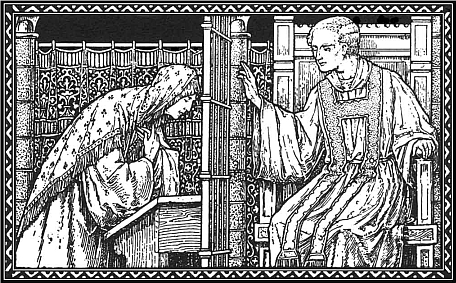
I have found myself slipping back into adversarial mode, endlessly finding fault with what you say, nitpicking where there has been nothing more substantial to pounce upon. This despite spotting this tendency in myself previously, and openly abjuring it. Such persistent behaviour has a simple reason: that your view of the world has important differences from mine. Instead of accepting difference, I let my emotions perceive it as a threat as a threat to my own world-view, a cobra poised to strike, which must be instantly scotched. These emotions reacted to the thought, “Bryan is trying to edge me into a corner: every time I give an inch of ground, he gains strength. I’ll find myself checkmate if I don’t fight back.” So I miss the gift you are offering, and in sniping from the metaphorical rooftops without revealing my own position any more than necessary, I oblige you to more vigorous defence and counter-offensive.
So now, I don’t just call a truce. I don’t surrender. I don’t claim victory. I shut my eyes and count to some adequate number. When I open my eyes again, I realize that there is no insurgency. It’s true that we’re armed to the teeth with words, but these skirmishes are merely exercises, and I don’t mean aggressive military ones: more like exercises for the good of our health.
By way of penance and reparation I intend to summarise in few words what I have learned, and not even bother with further wrangling. (Let us see how long this lasts!)
In “The World”, you elegantly and persuasively expounded a notion of Reality. Writing before dawn, you took your examples from immediate experience. A bird was singing. You didn’t know the name of its species but visualised that it predated man, so even before it was ever observed by man and given a name, it still had its unique form, part of an ongoing reality which didn’t need human observation to validate it.
You explored the contrast between reality and illusion, whilst pointing out that if we merely trust in subjective perception to give us a continuous feed of reality as it occurs, we easily fall victim to illusion.
You used the example of a road and vehicles on it as “evidence of the co-operation between reality and the mind”: demonstrating that reality is not just there to be observed, but can have intimate relations with mind, from which viable & useful offspring may be born.
You consider what happens when you doubt the authenticity of inferred reality. Some of it you cannot personally vouch for, but you rely upon the testimony of others. You don’t just rely on them not lying. You rely only on facts which have been used as building blocks over time, tested over again in so many ways and never found wanting.
Finally you devise a metaphorical thought experiment for dealing with doubt. You attempt to flee from the room through a door marked “doubt”. The room is the world. You go out the door but it leads back into the same room that you exited from, every time. (I think René Descartes visited you in a dream to teach this!)
I applaud the piece. I confess that I drafted a riposte, one which sniped from the rooftops at what I thought were suspicious military exercises threatening my future strategy. I may use them some time, because taken out of the adversarial context my sword might make a good ploughshare.
I shall continue with your other posts, working backwards, extracting the juice from what you have written, to take advantage thereof, as continuation of the penance.
Saturday, 20 August 2011
B: The World
It's early morning. The light is just beginning to show in the sky outside my window. A bird perched somewhere in the tree below greets the day with its delicate call. Man has several names for this bird and this tree in various languages, and science has names for them in Latin which identify their genus and species. I don't know these names, but then neither do the bird or the tree. These names were not affixed to them by nature, but rather by man. However, these names do identify genuine natural realities about them. The words "bird" and "tree" signify them as something distinct from one another, and their particular names signify their distinctions from others of their type. If it is a sparrow in the tree, we call it so in English because it possesses those attributes in common with birds of the type "sparrow", and in contrast to the attributes of another bird which we would call a "blue jay." It has possessed these defining attributes for millennia before mankind affixed these attributes with the name "sparrow", for millennia before there even was such a thing as man, and it was certainly long, long before man began to be confused by himself and to doubt himself and to doubt the world and to ask, "Where is this 'sparrowness'? Is it real? Is it in the bird somewhere? Could I find it if I cut the bird open?" But the sparrow has gone on, simply being what it is, contentedly singing the unique song sung only by sparrows, oblivious to the sweet, simple, and breathtakingly obvious answer it's providing to our question.
At this hour there is very little traffic passing by on the road below. The road and the vehicles that travel on it are creations of man. They were ideas conceived in the mind of man, and turned into physical realities by shaping and manipulating matter, giving it the form and function designed by the human mind. These things stand as a testimony, as evidence of the co-operation between reality and the mind. The matter involved behaves according to physical laws, and the people who designed these things were able to do so because they discovered these laws, they believed these laws, and they shaped the material involved in such a way that they would be able to use these laws to their advantage. The car travels on the road because of the laws of motion, of thermodynamics, of combustion, and many more besides. If these laws were simply the invention of man, or if they existed solely as a fantasy in the mind of man, or if they had no relation to physical reality outside the mind of man, then the matter involved in the car and road would behave completely indifferently to these laws. They would slump like stubborn horses refusing to stir as man struggles at the reigns of his desires. They would sit rotting in a field as useless heaps of junk. For they themselves are objects which lie outside the mind of man and beyond its direct control. The fact that the car works stands as proof of the accuracy of man's concepts of these laws. Like the bird and the tree, man has named these laws, man has studied these laws and formulated theories about them, man has designated them by the general word "laws" because of his confidence in his own ideas about them, but the functions and relationships between physical matter that they designate are genuine realities. And again like the bird, these functions and relationships existed long before man discovered them, long before man existed. "Nature", Francis Bacon said, "to be commanded, must be obeyed." The car drives by as elegant proof of this.
As the car passes, its sound increases in pitch as it approaches me, and then abruptly switches to a low pitch as it goes by and speeds off in the other direction. This is called "The Doppler Effect", and it is a peculiarity of my perception. The sound of the vehicle never actually changes, but yet this effect is not entirely an illusion either. It is a relationship between my ear, the speed of the vehicle relative to me, my position relative to the vehicle, and the compression and decompression of the sound waves as they travel the distance between the car and me. There are a number of such peculiarities. These are not delusions or unrealities, but rather consequences of my perspective on the world. The way the information of the world reaches my senses and my mind is itself part of the world, and it too behaves natural law. Like the Doppler Effect, these things can be discovered, scrutinized, and studied as part of the reality with which we all have to deal.
Sometimes these peculiarities have led man astray, and such an example is appearing now just over the trees. In casual speech we still say the sun is rising, but by now it is common knowledge that the Earth is turning to meet the sun. It is true that I have no first hand verification of this fact, and that I'm forced to take other people's word for it. It is possible that mankind is in error about this "common knowledge", or that a vast number of people have lied to me about it all my life. But when I consider the evidence that the human race as a whole claims to possess on the matter, my mind is set at ease on the issue of error. When I consider the number of people that would have to be involved in a "lie", various world governments, various space programs, phone companies, GPS manufactures, astronomers...well, the list goes on....I'm persuaded to accept this "word" as honest in the face of the alternative. I'm confronted frequently by such situations, most of them not as clear cut and easy to decide on. I weigh the available information, consider the agendas of the source, consider its fidelity to other information, and consider how much internal sense it makes unto itself. It may not be the most solid foundation to decide what one believes in, but given the limits of my own first-hand experience, it's the best that I can do if I hope to learn anything beyond the limits of my own life and the things that I personally witness. I am not omniscient, nor do I claim to be, nor do I believe anyone else can claim to be. It is always possible that I am mistaken, or that I have been misled. But I believe that the truth is constant, regardless of my wanderings. I have seen Saturn through the lens of my own telescope, and I have seen that Venus has phases like our moon. This is valuable corroboration of what I've been told, as well as an awe-inspiring experience. There's nothing quite like seeing it for yourself.
Although I must occasionally rely on my fellow man for factual information, it is not through man that this information is fact. Whatever the actual relationship between the sun and Earth, or the actual nature of anything else for that matter, the facts of these things exist without regard to whether they are known or believed by ten or ten million people. I may rely on my fellow man in my belief that the world is round, but if the world is round, it is not out of respect to the opinions of men. For thousands of years, man believed that the Earth was flat, and the world stayed round in absolute indifference to that belief. When Eratosthenes calculated the circumference of the Earth by comparing a shadow made by the sun at Alexandria with a shadow made by the sun in Egypt, the truth of the round Earth was waiting there to be discovered, outside of the ignorance of man. When Copernicus discovered that the Earth went round the sun, the rest of mankind was still in the dark, scratching their heads over retrograde motion. If facts existed entirely through men, then the entire history of science would just be men making things up and then selling the rest of mankind on the idea in order to make it fact. It was the evidence presented by Copernicus and Eratosthenes that changed the minds of man, not the minds of man which changed the evidence. The power of consensus is in its persuasiveness, not in its control over reality. How can I know this for sure? Another car drives by, reminding me of the physical laws by which it operates, reminding me of man's cooperation with those laws as facts beyond themselves, reminding that the inventions of man have often worked in defiance of consensus and the general faith of the population.
If I decide to trust in my fellow man, not as the determiners of my reality, but rather as fellow travelers seeking to discover its true objective nature, then I am able to gaze with them beyond our solar system, beyond our galaxy, and out to a distance of 14 billion light years in any direction. This is not believed to be the limits of our universe, but it is the limit of what we can see. We believe that this is so, because we believe that the universe came into being 14 billion years ago, and light from anywhere beyond that hasn't had time to reach us. This last idea is bit controversial back here on Earth, it challenges what many other people believe, and leads to a lot of arguments along the frontiers of what we know, and what we are capable of knowing. But like my sparrow, the universe goes on, placidly indifferent to the conflicts and confusion of man. It is what is. Whole stars are born and die out without man ever setting eyes on them, possibly without anyone ever setting eyes on them. They burn just fine without the fuel of being seen.
So, this is the world as I find it. My confidence in it begins with me, with my first-hand experience and with the rational conclusions that I have drawn from that experience. I extend that confidence to the experiences, the explorations, the discoveries, and the ideas of my fellow man, depending on what degree I'm willing to trust them and how much I concur with their conclusions. But I believe that the world out there beyond me and the facts of that world exist without regard for my confidence, or my confidence in my fellow man, or their own confidence in what they think they know. I believe that the world out there is what it is regardless of what I think I know about it, or what anyone else thinks they know about it. First-hand experience has convinced me of that much at least. The world has demonstrated its constancy to me time and again. I go to sleep, and reawaken and the world shows every evidence of having gone on steadily without my knowledge. The world has cut me and bruised me many times to prove its solid existence. It has often frustrated my efforts and at other times it has rewarded them in turn to demonstrate its indifference to my whims and wishes, and its obedience to my cooperation with its facts.
My understanding of the world begins here with me, in this room. I can doubt the things I've been told about it. I can doubt my own conclusions that I've drawn about it. But I can not doubt the world itself. I can not doubt the foundation of it, which begins for me with my immediate experience. It could be said that I have no grounds for believing in this world, but yet I have no grounds for doubting it either. The world itself transcends belief and doubt, because the grounds for those things have to be found in the world.
Suppose I do try to doubt the world. I reject the world wholesale as it begins for me here in this room. I try to flee from it through a door marked "doubt." I find that this door opens onto this same room, and it returns me right back to the world, searching for the grounds with which to justify this doubt. I dismiss this world as a dream, and again I try the door hoping it will return me to waking reality. I find myself right back in this room facing the world which provides me with no evidence that I am asleep or that there is any "waking" world beyond this one. I defiantly declare that the world is an illusion unto itself, and I flee again through the door, only to find myself dumped again on the solid floor of this room, the world showing me no distinction between physical matter and the illusion of physical matter.
As a thinking being, it is my privilege to keep insisting on trying that door for the rest of my life if I like, to perpetuate my attempt at doubt indefinitely, but I can not escape the fact that that door will always return me right back to this room. It is not that I have grounds for believing in the world. It is not that I have a reason to believe in the world. It is simply that the world is inescapable. My only choice is between the futility of trying that door over and over, or embracing the world as I find it, as it begins here with my immediate experience in this room. Only by embracing the world can I leave this room, to explore it, to learn about it, to understand it, and to experience it.
At this hour there is very little traffic passing by on the road below. The road and the vehicles that travel on it are creations of man. They were ideas conceived in the mind of man, and turned into physical realities by shaping and manipulating matter, giving it the form and function designed by the human mind. These things stand as a testimony, as evidence of the co-operation between reality and the mind. The matter involved behaves according to physical laws, and the people who designed these things were able to do so because they discovered these laws, they believed these laws, and they shaped the material involved in such a way that they would be able to use these laws to their advantage. The car travels on the road because of the laws of motion, of thermodynamics, of combustion, and many more besides. If these laws were simply the invention of man, or if they existed solely as a fantasy in the mind of man, or if they had no relation to physical reality outside the mind of man, then the matter involved in the car and road would behave completely indifferently to these laws. They would slump like stubborn horses refusing to stir as man struggles at the reigns of his desires. They would sit rotting in a field as useless heaps of junk. For they themselves are objects which lie outside the mind of man and beyond its direct control. The fact that the car works stands as proof of the accuracy of man's concepts of these laws. Like the bird and the tree, man has named these laws, man has studied these laws and formulated theories about them, man has designated them by the general word "laws" because of his confidence in his own ideas about them, but the functions and relationships between physical matter that they designate are genuine realities. And again like the bird, these functions and relationships existed long before man discovered them, long before man existed. "Nature", Francis Bacon said, "to be commanded, must be obeyed." The car drives by as elegant proof of this.
As the car passes, its sound increases in pitch as it approaches me, and then abruptly switches to a low pitch as it goes by and speeds off in the other direction. This is called "The Doppler Effect", and it is a peculiarity of my perception. The sound of the vehicle never actually changes, but yet this effect is not entirely an illusion either. It is a relationship between my ear, the speed of the vehicle relative to me, my position relative to the vehicle, and the compression and decompression of the sound waves as they travel the distance between the car and me. There are a number of such peculiarities. These are not delusions or unrealities, but rather consequences of my perspective on the world. The way the information of the world reaches my senses and my mind is itself part of the world, and it too behaves natural law. Like the Doppler Effect, these things can be discovered, scrutinized, and studied as part of the reality with which we all have to deal.
Sometimes these peculiarities have led man astray, and such an example is appearing now just over the trees. In casual speech we still say the sun is rising, but by now it is common knowledge that the Earth is turning to meet the sun. It is true that I have no first hand verification of this fact, and that I'm forced to take other people's word for it. It is possible that mankind is in error about this "common knowledge", or that a vast number of people have lied to me about it all my life. But when I consider the evidence that the human race as a whole claims to possess on the matter, my mind is set at ease on the issue of error. When I consider the number of people that would have to be involved in a "lie", various world governments, various space programs, phone companies, GPS manufactures, astronomers...well, the list goes on....I'm persuaded to accept this "word" as honest in the face of the alternative. I'm confronted frequently by such situations, most of them not as clear cut and easy to decide on. I weigh the available information, consider the agendas of the source, consider its fidelity to other information, and consider how much internal sense it makes unto itself. It may not be the most solid foundation to decide what one believes in, but given the limits of my own first-hand experience, it's the best that I can do if I hope to learn anything beyond the limits of my own life and the things that I personally witness. I am not omniscient, nor do I claim to be, nor do I believe anyone else can claim to be. It is always possible that I am mistaken, or that I have been misled. But I believe that the truth is constant, regardless of my wanderings. I have seen Saturn through the lens of my own telescope, and I have seen that Venus has phases like our moon. This is valuable corroboration of what I've been told, as well as an awe-inspiring experience. There's nothing quite like seeing it for yourself.
Although I must occasionally rely on my fellow man for factual information, it is not through man that this information is fact. Whatever the actual relationship between the sun and Earth, or the actual nature of anything else for that matter, the facts of these things exist without regard to whether they are known or believed by ten or ten million people. I may rely on my fellow man in my belief that the world is round, but if the world is round, it is not out of respect to the opinions of men. For thousands of years, man believed that the Earth was flat, and the world stayed round in absolute indifference to that belief. When Eratosthenes calculated the circumference of the Earth by comparing a shadow made by the sun at Alexandria with a shadow made by the sun in Egypt, the truth of the round Earth was waiting there to be discovered, outside of the ignorance of man. When Copernicus discovered that the Earth went round the sun, the rest of mankind was still in the dark, scratching their heads over retrograde motion. If facts existed entirely through men, then the entire history of science would just be men making things up and then selling the rest of mankind on the idea in order to make it fact. It was the evidence presented by Copernicus and Eratosthenes that changed the minds of man, not the minds of man which changed the evidence. The power of consensus is in its persuasiveness, not in its control over reality. How can I know this for sure? Another car drives by, reminding me of the physical laws by which it operates, reminding me of man's cooperation with those laws as facts beyond themselves, reminding that the inventions of man have often worked in defiance of consensus and the general faith of the population.
If I decide to trust in my fellow man, not as the determiners of my reality, but rather as fellow travelers seeking to discover its true objective nature, then I am able to gaze with them beyond our solar system, beyond our galaxy, and out to a distance of 14 billion light years in any direction. This is not believed to be the limits of our universe, but it is the limit of what we can see. We believe that this is so, because we believe that the universe came into being 14 billion years ago, and light from anywhere beyond that hasn't had time to reach us. This last idea is bit controversial back here on Earth, it challenges what many other people believe, and leads to a lot of arguments along the frontiers of what we know, and what we are capable of knowing. But like my sparrow, the universe goes on, placidly indifferent to the conflicts and confusion of man. It is what is. Whole stars are born and die out without man ever setting eyes on them, possibly without anyone ever setting eyes on them. They burn just fine without the fuel of being seen.
So, this is the world as I find it. My confidence in it begins with me, with my first-hand experience and with the rational conclusions that I have drawn from that experience. I extend that confidence to the experiences, the explorations, the discoveries, and the ideas of my fellow man, depending on what degree I'm willing to trust them and how much I concur with their conclusions. But I believe that the world out there beyond me and the facts of that world exist without regard for my confidence, or my confidence in my fellow man, or their own confidence in what they think they know. I believe that the world out there is what it is regardless of what I think I know about it, or what anyone else thinks they know about it. First-hand experience has convinced me of that much at least. The world has demonstrated its constancy to me time and again. I go to sleep, and reawaken and the world shows every evidence of having gone on steadily without my knowledge. The world has cut me and bruised me many times to prove its solid existence. It has often frustrated my efforts and at other times it has rewarded them in turn to demonstrate its indifference to my whims and wishes, and its obedience to my cooperation with its facts.
My understanding of the world begins here with me, in this room. I can doubt the things I've been told about it. I can doubt my own conclusions that I've drawn about it. But I can not doubt the world itself. I can not doubt the foundation of it, which begins for me with my immediate experience. It could be said that I have no grounds for believing in this world, but yet I have no grounds for doubting it either. The world itself transcends belief and doubt, because the grounds for those things have to be found in the world.
Suppose I do try to doubt the world. I reject the world wholesale as it begins for me here in this room. I try to flee from it through a door marked "doubt." I find that this door opens onto this same room, and it returns me right back to the world, searching for the grounds with which to justify this doubt. I dismiss this world as a dream, and again I try the door hoping it will return me to waking reality. I find myself right back in this room facing the world which provides me with no evidence that I am asleep or that there is any "waking" world beyond this one. I defiantly declare that the world is an illusion unto itself, and I flee again through the door, only to find myself dumped again on the solid floor of this room, the world showing me no distinction between physical matter and the illusion of physical matter.
As a thinking being, it is my privilege to keep insisting on trying that door for the rest of my life if I like, to perpetuate my attempt at doubt indefinitely, but I can not escape the fact that that door will always return me right back to this room. It is not that I have grounds for believing in the world. It is not that I have a reason to believe in the world. It is simply that the world is inescapable. My only choice is between the futility of trying that door over and over, or embracing the world as I find it, as it begins here with my immediate experience in this room. Only by embracing the world can I leave this room, to explore it, to learn about it, to understand it, and to experience it.
B: Some Preliminary Notes II
Of course, in establishing the existence of objective reality, it might be helpful to define exactly what I mean by "objective reality." The short answer is the idea that reality exists independent of the mind, and the facts of that reality exist irregardless of anyone's particular ideas or beliefs about them. For instance, the idea that the round world exists regardless of whether everyone believes it's round or even if everyone believed it was flat (as they once did). The world is what is, outside of the mind.
Of course, that's just the simple answer, and you're not home free yet. Empiricism, for example, admits the existence of the physical world, but holds that anything non-physical: abstractions, concepts, ect. are only products of the mind. At first this almost seems appealing. Existence appears to be a pristine field of pure snow untrampled by messy human ideas. The problems soon rear their head, though. It restricts the mind's contact with reality strictly to the sensory level. Anything higher than that is sort of kept in a hermetically sealed bubble. Love? Freedom? You can't see them. You can't touch them. Into the bubble they go. Then you start getting bogged down in the details. You find a rock on the beach. Well, "rock" is a concept. Into the bubble it goes. So you find a thing on the beach. Well, this idea that the thing is a separate entity from its surroundings is a mode of perception. Into the bubble it goes. From Hume you get to Kant, and pretty soon you notice, "Hey, time and space aren't physical things." So into the bubble they go, and this pristine world collapses in on itself, imploding in the mind, and empiricism is devoured by its own internal logic.
So naturally, I don't want to make that mistake. No, by objective reality I mean not merely physical matter but also the properties, relationships, workings, and physical laws of that matter. Causality is an idea, but it refers to a real phenomenon exhibited by matter.
This is at least a basic idea.
Of course, that's just the simple answer, and you're not home free yet. Empiricism, for example, admits the existence of the physical world, but holds that anything non-physical: abstractions, concepts, ect. are only products of the mind. At first this almost seems appealing. Existence appears to be a pristine field of pure snow untrampled by messy human ideas. The problems soon rear their head, though. It restricts the mind's contact with reality strictly to the sensory level. Anything higher than that is sort of kept in a hermetically sealed bubble. Love? Freedom? You can't see them. You can't touch them. Into the bubble they go. Then you start getting bogged down in the details. You find a rock on the beach. Well, "rock" is a concept. Into the bubble it goes. So you find a thing on the beach. Well, this idea that the thing is a separate entity from its surroundings is a mode of perception. Into the bubble it goes. From Hume you get to Kant, and pretty soon you notice, "Hey, time and space aren't physical things." So into the bubble they go, and this pristine world collapses in on itself, imploding in the mind, and empiricism is devoured by its own internal logic.
So naturally, I don't want to make that mistake. No, by objective reality I mean not merely physical matter but also the properties, relationships, workings, and physical laws of that matter. Causality is an idea, but it refers to a real phenomenon exhibited by matter.
This is at least a basic idea.
B: Some Preliminary Notes I
I believe that my "take the world as I find it" comment from the other day may have inadvertently supplied me with a place to make a fresh start with all of this. It is, in summary, the same basic position that I have advocated all along here, but I think it solves a few problems with my original approach.
1.) It dispenses with the adversarial approach, which I think really only works if your adversary is clearly defined and clearly recognizable. If I say, "This is my problem with Creationists" or "This is my problem with evolutionists.", people know what I'm talking about, and they're quite ready to take up their torches and pitchforks, either to follow me or storm my door, depending on where their sympathies lie. But to pose an adversary like "Opponents of Reason", would, I think, leave most people either scratching their heads or at least unenthused. I think, in effect, it would come off sounding like I'm railing against any random asshole who disagrees with me. "These people who like piss flavored jelly beans must be stopped." Yeah, that's not gonna work. There are people antagonistic to reason, and I see it frequently, but it has to be addressed in some other way, and not be the main thrust of the piece.
2.) It helps somewhat with a boot-strap problem that I was having with my original approach. I was trying to establish objective reality on the grounds of reason, all while trying to prove the efficiency of reason in dealing with objective reality. The problem, obviously, is that this argument proceeds on the basis of its own conclusion. It seems I can't have my world and eat it too. It seems that the proposition of objective reality has to be given prior to reason, as the foundation of it. This would mean that objective reality has to be given on the grounds of choice, a choice to "take the world as I find it."
Needless to say, I'm not thrilled about this approach, and the obvious implications of it. I find the word "faith" just as repugnant as Vincent finds the word "truth", and oddly enough, for much the same reason (some common ground there?). It seems to me that faith would imply that doubt is the default position and it has to be surpassed in favor of existence. I could just as easily claim the opposite, that existence is the default position and doubt never has to necessarily enter the picture. Faith would also seem to imply the belief in something in the absence of evidence, but yet this issue transcends evidence. It is the basis of evidence. How can you have evidence that there is such a thing as evidence?
I hear myself saying these things, and I realize how familiar it all sounds, how much like the arguments for religion that I heard for years, "transcends evidence" indeed. And yet, I can't help feeling that there's something I'm missing here, something that tips the scale in favor of choosing existence, something that justifies the choice. Of course, that kicks me right back to reason. *Woof* I feel as though I've sailed to the edge of the cosmos and I'm rebounding off of my own reflection.
This will take some work, but this where it has to start.
1.) It dispenses with the adversarial approach, which I think really only works if your adversary is clearly defined and clearly recognizable. If I say, "This is my problem with Creationists" or "This is my problem with evolutionists.", people know what I'm talking about, and they're quite ready to take up their torches and pitchforks, either to follow me or storm my door, depending on where their sympathies lie. But to pose an adversary like "Opponents of Reason", would, I think, leave most people either scratching their heads or at least unenthused. I think, in effect, it would come off sounding like I'm railing against any random asshole who disagrees with me. "These people who like piss flavored jelly beans must be stopped." Yeah, that's not gonna work. There are people antagonistic to reason, and I see it frequently, but it has to be addressed in some other way, and not be the main thrust of the piece.
2.) It helps somewhat with a boot-strap problem that I was having with my original approach. I was trying to establish objective reality on the grounds of reason, all while trying to prove the efficiency of reason in dealing with objective reality. The problem, obviously, is that this argument proceeds on the basis of its own conclusion. It seems I can't have my world and eat it too. It seems that the proposition of objective reality has to be given prior to reason, as the foundation of it. This would mean that objective reality has to be given on the grounds of choice, a choice to "take the world as I find it."
Needless to say, I'm not thrilled about this approach, and the obvious implications of it. I find the word "faith" just as repugnant as Vincent finds the word "truth", and oddly enough, for much the same reason (some common ground there?). It seems to me that faith would imply that doubt is the default position and it has to be surpassed in favor of existence. I could just as easily claim the opposite, that existence is the default position and doubt never has to necessarily enter the picture. Faith would also seem to imply the belief in something in the absence of evidence, but yet this issue transcends evidence. It is the basis of evidence. How can you have evidence that there is such a thing as evidence?
I hear myself saying these things, and I realize how familiar it all sounds, how much like the arguments for religion that I heard for years, "transcends evidence" indeed. And yet, I can't help feeling that there's something I'm missing here, something that tips the scale in favor of choosing existence, something that justifies the choice. Of course, that kicks me right back to reason. *Woof* I feel as though I've sailed to the edge of the cosmos and I'm rebounding off of my own reflection.
This will take some work, but this where it has to start.
Thursday, 18 August 2011
V: More types of reality

Certain reality: It’s what I know for a fact, with my faculty of knowing.
Felt reality: I can go there, feel its cold wind on my face etc. Its impact upon me is more immediate than “knowing”.
Inferred reality: I construct a picture of reality from evidence, using logic and established understanding of effects produced by causes.
It’s important to add some more types, with minimum delay. Only when we have collected a full set can we get a comprehensive mapping of this composite of overlapping ideas that we generalise as Reality.
(Personal note. The more I work with Bryan, the more I feel able to rely on him to point out my errors, whether in expression or—more arguably—deep content. This liberates me to write down the ideas which pop into my head without too much worry as to how a reader from off the street might find them. When I say “the ideas pop into my head”, I mean the words come flowing unconstrained via my fingers and keyboard. The ideas themselves have lain in my head for years, sometimes stagnantly, sometimes churned up by attempts to make sense of them. But they have not till now been put into words.)
Survival reality: “This is edible, that is not.” “This creature might kill me. That one might help me.” This I guess to be the kind of reality that an animal lives in pretty much all the time. In the lower animal, the instinct is built-in from birth. In the higher species, the basic program is there but some data has to be obtained to activate it properly. With certain birds, the first thing that moves is henceforth considered to be the chick’s mother, ever after. With humans there is a propensity to learn language: what language becomes one’s mother-tongue is environmentally determined. With humans, learned behaviour so much exceeds instinct that the role of instinct is easy to overlook, for example in a discussion of the place of reason in human life.
Survival reality is what we see if the survival centre of our brain has gone on alert. It’s a filtered version of reality, simplified on a “need-to-know” and often time-critical basis. The young of many species including man use play, especially fighting games, to exercise and populate with data the instinct for operating in survival-reality mode.
To summarise, survival reality is the subset of reality we see when we are in survival mode. In survival mode, we are not just driven by instinct and analogous experience. We can use all the rationality we have at our disposal too. But we may not use it too well. The champion golfers, tennis-players and ruthless dictators are those whose use of reason is not diminished by the deadliness of their plight. Enough! This is about types of reality, not modes of being. But of course they are connected.
Lastly, (but I don’t suppose finally), there is what I shall provisionally call—
Existential reality. This is reality based on the sense of self. What I see as reality is biased in favour of the person I perceive myself to be. If I call myself a Democrat, I’ll see one reality: if a Republican, another. There are all sorts of other antinomies to be considered: homeopath/allopath; atheist/Christian; pro-life/pro-choice, and so on. The moment I say to myself “This is what I am”, I have taken sides, and my world of reality will be filtered accordingly.
But self-declaration is only the visible tip of this great iceberg of difference, that generates as many worlds as there are observers. What I consider myself to be is more often left unsaid. Even in my private thoughts I may not say it: especially in areas where my self-image is negative. If I feel unloved, the world is a hostile place. So when I do feel loved, my world changes in an instant. It’s hard to find someone who will love me, especially if I am unable to love myself. So thank God for Jesus! When I’m convinced (I mean I know) that Jesus loves me, the world changes. That the world changes before my very eyes is proof that the love I receive is real; and therefore proof that Jesus is alive. (I don’t speak personally in this matter, only sympathetically.)
There is a connection between survival reality and existential reality, as if they are ends of the same spectrum. The first seeks survival in a dangerous world. The second seeks well-being.
Having reached this far, you might argue that reality is not at all how I’m depicting it. You might say that reality is not altered by my perception. It goes on being what it is. That is what makes it reality. You might even say that I have betrayed my own argument, by talking of filters; because surely, on the other side of the filter, lies raw, unfiltered reality—the very thing which you call Reality, pure and simple. All the rest you may say, is merely perception, which is obviously imperfect. If you say this you are in noble company; for this is precisely what Plato said.
I shall agree with you, for agreement is always more agreeable than dispute. But I shall point our that the pure and simple unfiltered reality is not directly knowable, because you and I (and all the others) all have our own filters firmly in place. They change but they can never be removed. The only kind of reality the other side of the filters, therefore, is Inferred reality. Not everyone makes the same inferences, nor do they use the same evidence or the same rules for the effects produced by causes. So, much as Science depends on inferred reality for both its inputs and outputs, it has to rely on consensus.
Which is part of my argument for there not being one absolute Truth.
And, as has often been said, by those on various sides of the argument: God, if He exists, is unknowable, dwelling in that unreachable place where, no doubt, absolute Truth, absolute Reality, perfect Reason, and all kinds of imagined perfections, also dwell. This doesn’t prevent hopeful vendors from promising to sell you the key.
Wednesday, 17 August 2011
V: Some types of reality

---the present is real. I can employ all my senses to taste its reality.
---the future is real because I can go there, on condition that I wait till it becomes the present
---the past is not real, because I cannot go there. Little bits of it remain, in memory, ruins, descendants and so on. But they are not the past, they are remnants from the past. And no matter how long I wait, the past never becomes the present.
If I define reality as something I know for a fact:
---the present is real. It’s available to me for immediate cognition, without need for introspection. Not all of the present is available to me, however: only that part of it falling within the radius of my attention.
---some of the future is real, but it’s mostly empty like next year’s diary. I know the sun will rise and the moon will go through its phases. The days of the week will succeed one another. My alarm clock will sound according to its setting, assuming it works properly. My knowledge on these points is definite. But what will happen (within the radius of my attention, as stated above) is in other respects unknown, therefore unreal.
---The past is real, within the radius of my memory, the aides-mémoire at my disposal (photos etc), and sources of fact available to me (letters, history books, things which have not been changed by time)
There are other definitions of reality which we can think up and examine as above, or in other ways.
If I define reality as something whose existence can be inferred logically:
---the present is real. It doesn’t even need to be inferred logically!
---the past is real. As Bryan says, “… it did exist as a prior state of things. It's not just a fantasy dreamed up by our memories. It leaves its traces even in the present. For example, they’re tearing down the old hospital here in town. I drive by the half-demolished building. I don’t believe that this ruined structure simply arrived here ex nihilo and popped into existence in the present.” He could have confronted Creationists in the same manner and mentioned dinosaur fossils.
---the future is real. Every day we’ve anticipated a tomorrow and a tomorrow came along. The end of the world has been falsely predicted on many dates, now past, which turned out to be just like any other dates.
However, I do have a problem with inferred reality. Here are some concerns:
---logically, there was a beginning to the universe. As science elaborates the evidence and its means of analysing the evidence, it may reach a stage of certainty about the nature of the Big Bang. Does this then become part of inferred reality? (Robinson Crusoe saw a footprint in the sand, not his own. Did this logically mean that another human being had been there on that spot, recently? Yes!)
---parts of inferred reality become the exclusive domain of experts, for only they can gather the evidence and perform the logical manipulations. If therefore I subscribe to inferred reality as true reality, I am forced to accept the dictatorship of the experts, and my own experience is downgraded.
---only in the last few centuries have reliable instruments and intellectual tools to determine inferred reality been forged. If inferred reality is true reality, then it was unknown to our earlier ancestors, and remains unknown today to those who live without benefit of science and technology, or at least an education system which propagates their principles. Such people must be swimming in an ocean of ignorance and superstition, and have done so for many thousands of years. All our ancestors.
That seems fishy to me.
Continued*
So what did our ancestors do for reality? Like us, they had reality defined as a place you can go and examine things in detail. Like us they had reality defined as things we know for a fact. But I’m supposing they didn’t have much inferred reality. Even the Greeks didn’t do experiments. They speculated, often wrongly.
But one kind of reality has certainly been known to Man for as long as we have written records and scriptures: the reality of subjective experience, imaginatively interpreted. Setting aside common sense-experience, setting aside the basic emotions, we each have subtler feelings, which we may or may not be able to express. Wordsworth certainly had a go at it:
My heart leaps up when I behold
A rainbow in the sky:
So was it when my life began,
So is it now I am a man,
So be it when I shall grow old
Or let me die!
The rainbow is real, but Wordsworth’s response to it is just as real, perhaps more so. Why do I say “perhaps more so”? Because there is a way of looking that is so direct that it doesn’t name or analyse, doesn't separate the thing seen from the feeling that one has about the thing. You might call it a child-like response to perception. Offer to a child a spoonful of what it doesn’t like, and there will be no thought of “this is food; I am hungry; my mother will not offer me poison; therefore I should open my mouth and swallow it.” There is just a compressing of the lips, or an “Ugh!”
I take this kind of reaction, to the rainbow or the spoonful of something disliked, to be a primary reality. It’s the reality of instinctual behaviour, unmediated by thought; such as you will find in a primitive animal—a slug, say. To many people, it’s virtuous to distance oneself from animal behaviour: this retreat from our evolutionary origins is particularly manifest in the main religions, which praise the migration from the material and gross to the spiritual and subtle.
More to Follow**
Subscribe to:
Posts (Atom)